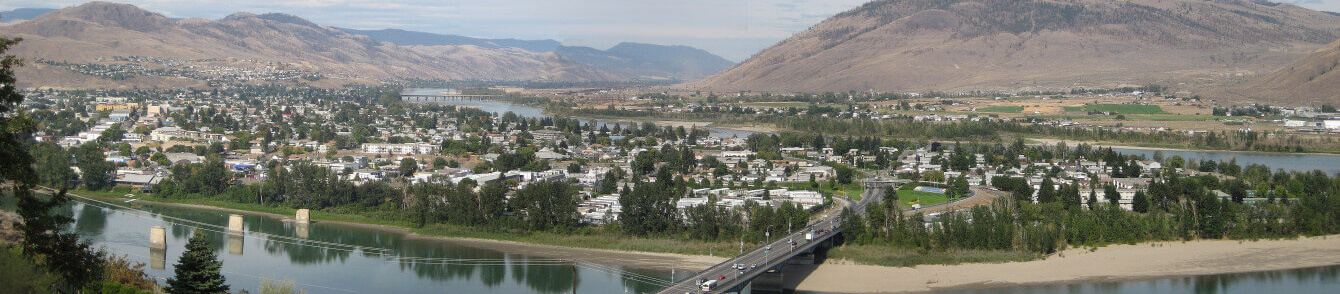
Kamloops City on Construction Target

This article appeared in the Kamloops This Week on August 17, 2011 and was written by Jeremy Deutsch.

Kamloops New Home ConstructionJust when construction activity was looking tepid in the Tournament Capital, along came July.

Though the number of residential permits did drop last month, overall construction value topped that of July 2010, according to the city’s building-permit department.

The city handed out $14 million in building permits in July, compared to $10 million during the same month in 2010.

So far in 2011, the city has recorded $97 million in construction activity, compared to $126 million through the same span last year.

The solid numbers from July seem to have caught city hall by surprise.

David Trawin, director of development and engineering services, said it appears Kamloops will meet its target for the year.

In 2010, the city issued $191-million worth of building permits, but expected that number to drop in 2011 to about $140 million.

“Will we hit the $190 million we hit last year? No. We’re definitely not going to and I don’t think we expected to,” Trawin said.

He also expects August construction numbers to be similarly steady.

Part of the month’s strong showing was the result of a big jump for commercial construction.

The city issued $4.6-million in commercial-building permits for the month, a significant increase from the $300,000 value in July 2010.

The number of single-family permits issued in July hit 13, a little more than half of the 21 permits issued at the same time last year.

The city handed out $7.2-million worth of residential permits last month, compared to $9.3 million in July 2010.

Kamloops has only topped the $200-million mark in permits once, in 2008, when it doled out $207-million worth of permits, which remains a record.

Housing starts in Kamloops were also down last month.

According to statistics from the Canadian Mortgage and Housing Corporation, the number of single-family housing starts in July dropped to 26 from 35 the previous year.

However the number of multi-family starts did increase —  to 56 from seven in July 2010.

Overall, housing starts have dropped by 18 per cent in Kamloops so far this year.

The drop in starts in Kamloops is still not as steep as other communities in the region, such as Penticton and Vernon, which recorded declines of 73 and 44 per cent, respectively.
Link

Sun Peaks Marks One Year as a Municipality

This article appeared in the Kamloops This Week on June 28, 2011 and was written by Jeremy Deutsch.

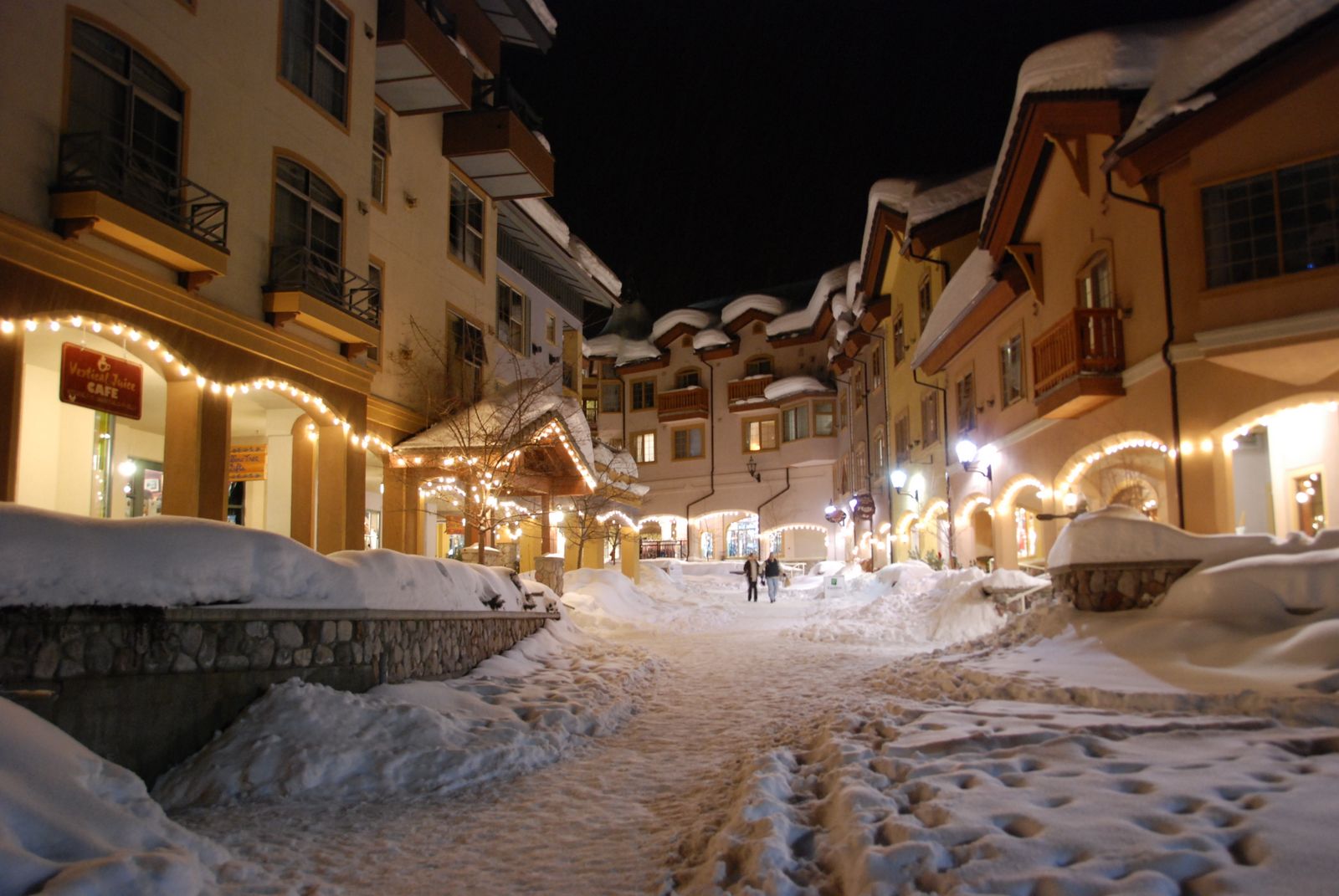
Sun Peaks Village, Kamloops, BCIt could be said the first year of the Sun Peaks municipality has been more like a cross-country jaunt than a downhill run.
That’s at least how Sun Peaks Mayor Al Raine might describe the year it’s been for the province’s newest municipality. “Unfortunately, people have high expectations that everything is going to happen in a hurry,” said Raine, who added the resort’s politicians have moved “conservatively” and “cautiously.” “It’s a little slower than I’d hoped for.”

It was a history-making day on June 28, 2010, as Sun Peaks officially became the first mountain resort in B.C. and Canada.

About 200 people, including residents and dignitaries, were at the Delta Sun Peaks Resort Hotel last year to watch the resort’s first council and mayor be sworn into office.

Though there were high hopes and expectations at last year’s ceremony, Raine admits the pace of progress for the municipality has been slower than he expected.

The newly formed resort municipality has been busy getting an administration in place and taking over services that were once the responsibility of Thompson-Nicola Regional District.

Sun Peaks, which is separate from Sun Peaks Resort Corporation, although a member of the corporation sits on the village’s council, is responsible for building inspection, emergency services and bylaws, while it will work with the TNRD on planning — specifically completing its official community plan.

The village also contracted out services to hire a bylaw enforcement officer, in part to deal with noise complaints. During the winter months, the municipality received 20 noise complaints.

The municipality is also in good financial shape heading into its second year, carrying a surplus in the first six months and putting $400,000 aside for future road improvements, firefighting equipment and the construction of recreation facilities. “There’s a very positive attitude toward the municipality,” Raine said. But, it hasn’t been all smooth powder for the mountain resort.

A funding application by the municipality for a health- and emergency-service centre was unsuccessful.

Raine noted doctors work part-time out of a small trailer, which he argued doesn’t present the most professional image for a world-class resort. He also hopes the municipality will secure a permanent ambulance based out of the community in the future, which would drop the time it takes to get patients to Royal Inland Hospital by half.

Sun Peaks is also working on another ongoing issue that involves the existence of the municipality itself. Earlier this year, the B.C. Supreme Court ruled the provincial government breached its constitutional duty to consult with the Adams Lake Indian Band with respect to the incorporation of Sun Peaks as a resort municipality. But, the court did not set aside the village’s incorporation, and instead ordered the province to engage in further consultation withe band.

At the time, Raine suggested that if the three sides just started meeting on a regular basis there would be some “very fruitful outcomes. The mayor appears to be backing up his words, as the municipality and the band are in the process of establishing a community-to-community forum. Raine hopes to improve the conversation and dialogue with bands around Sun Peaks.

In the meantime, the resort continues to post positive numbers at a time when tourism in the province continues to struggle. The number of room nights at the resort grew by 3.5 per cent last year, which reflected an increase in the summer guests and a slight drop in the winter.

Australia remains the leading oversees destination for Sun Peaks, while visitors from B.C. represent 59 per cent of the resort’s winter market. That’s also an increase over the past few years.

Link

Construction and Home Sales are Stable in Kamloops

This article came from the Kamloops Daily News and was written by Michelle Young on April 8th, 2011.

Steady. If there was one word that described both home construction and real estate sales in Kamloops, it’s steady.

City construction figures for March show permits were issued that month for 17 houses and 38 apartment style multi-family units, as well as two secondary suites and two single multi-family units.

That brings the year-to-date total to 84 housing units, matching the number from March of 2010. The difference is, last year’s housing included more single-family and less multi-family.

Kamloops and District Real Estate Association president Brian Ledoux said Friday the numbers reflect what he’s seeing and hearing about in the buying and selling market.

For sale signs are sprouting like tulips and daffodils (and this year, federal election signs) around town as homeowners come out of hibernation and turn their thoughts to upgrading or moving, he said.

Some of them are relisting after taking their houses off the market for the winter. “Right now, we’re tipping on more listings than sales, so it’s a slight buyer’s market,” he said.

Real estate agents are seeing the median price of house sales rise slightly, which indicates that more high-end homes are selling.

He recently had a client who moved here from Vancouver after selling in the hot market down there.

But there are still lots of first-time buyers shopping, too.

Ledoux said the economists that his association consults are predicting exactly what appears to be happening.

“It’ll be pretty steady for the next few years,” he said.

On the commercial construction side, the City’s permit numbers show there is still some lagging behind last year’s pace.

The first three months of this year saw $16.1 million spent on commercial and industrial projects, compared with $19.2 million in the same period in 2010.

Paul Fabri, market analyst with Canada Mortgage and Housing Corp., predicted detached housing construction will pick up later this year.

The best word to describe the forecast for 2011 in the Thompson Okanagan is “stable,” he said. “I expect a strong market in Kamloops.”

That strong market has led him to anticipate 550 housing units being built in town this year. So far, the City has issued permits for 84.

More severe winter conditions than usual have slowed construction in the region, he noted.

City building inspector Kundan Bubbar said at this point, multi family housing is up because of affordability.

A few large multi-family projects are expected to start later this year, including a commercial and 38-unit residential project by Mike Culos at Summit and McGill, and 38 apartments on Harrison Way in Aberdeen.

Link

Kamloops Recognized in ‘Top Ten Cities of the Future In the Americas’

This article came from Venture Kamloops on April 12, 2011.

View of North Kamloops from South KamloopsKamloops, BC – Kamloops, British Columbia has received a prestigious recognition from Foreign Direct Investment Magazine. The first ever Americas Cities of the Future 2010/11 competition which publishes a ranking of the economic business and financial strengths of cities across the American Continent (both North and South) has recognized Kamloops as 9th overall in their Micro Cities Category, 2nd for its Foreign Direct Investment Strategy and 5th for its Cost Competitiveness in their Micro Cities categories. Micro cities have a population of less than 100,000.

Foreign Direct Investment Magazine – Americas Cities of the Future 2010/11 shortlists were created by independent data collected by fDi Intelligence division across 405 cities across North and South America. Six categories were evaluated: Economic Potential, Human Resources, Cost Effectiveness, Quality of Life, Infrastructure and Business Friendliness. A seventh category was added to the scoring – FDI promotion strategy. In this category, 100 cities submitted details about their promotion strategy and this was judged and scored by our independent judging panel.

“This recognition of Kamloops’ efforts is well deserved. Our growth in infrastructure and business opportunities, our ideal location as a transportation hub as well as our superior quality of life amenities all contribute to Kamloops being a great place to invest. Having such a prestigious ranking will only enhance our efforts to attract international investment into our community,” said Dan Sulz, Executive Director Venture Kamloops.

A more detailed list of the winners and categories can be found in this month’s Foreign Direct Investment Magazine – April 2011 or on their website at www.fdiintelligence.com.

Link

1 8 9 10 11 12 15