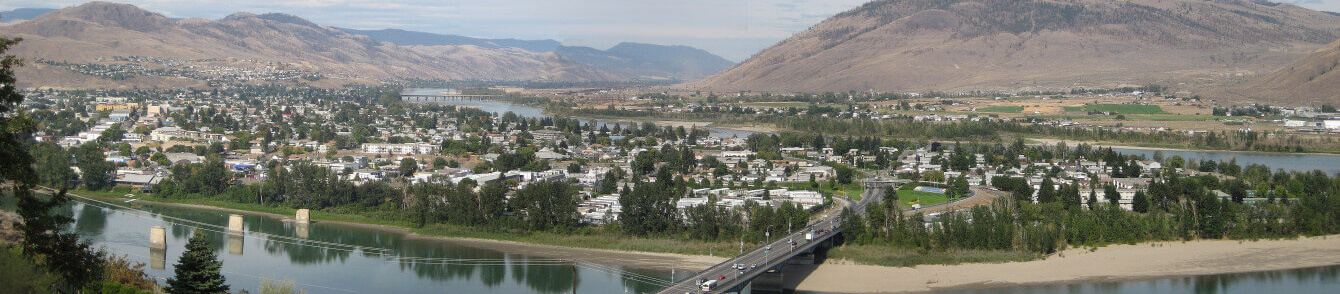
Home-based Businesses Continue to Grow, Kamloops This Week

This article appeared in the Kamloops This Week on February 8th, 2012 and was written by Jeremy Deutsch. I thought this would be an interesting article to post on my blog since I think it shows that Kamloops has a healthy economy in comparison to some other smaller cities. This article does not specifically relate to real estate in the city however a healthy economy by default keeps real estate moving (no pun intended). Read the article below.

In the last decade, the Tournament Capital has become a do-it-yourself town.

Roughly three quarters of new business licences handed out by the city since 2002 have been for home-based operations.

The numbers have city officials trying to figure out why there hasn’t been as big an increase for businesses in commercial- and industrial-zoned areas.

David Trawin, director of development and engineering services, said his department will study the issue.

He said the numbers are disconcerting, given there is an increasing number of vacancies  downtown, while the city has plans to grow the North Shore.

“What we are undertaking is looking at the geographic locations of those increases or decreases over 10 years in terms of business licensing,” Trawin said, suggesting new businesses are likely locating in the southwest sector of the city.

However, he wouldn’t speculate on any solutions — or if there is even a problem.

Since 2002, the city has handed 1,100 additional business licences, but only 350, or 35 per year, have gone toward businesses destined for commercial or industrial areas.

In the meantime, it turned out to be an average year for the city’s business-licensing department.

According to the 2011 development and engineering services department annual report, the number of new businesses licensed dropped by 3.5 per cent to 790, compared to 819 in 2010.

The total number of business licences in the city rose slightly to 5,512 for 2011, up from 5,421 the previous year.

The number has steadily increased over the last 10 years.

In 2002, there were 4,432 businesses licensed with the city.

The city also managed to take in more money, collecting an extra $15,247 in license revenue, bringing the total for the year to $1.025 million.

The number of home-based business in Kamloops also rose last year, to 1,943 from 1,915 the previous year.

Home-based businesses make up 34.9 per cent of all licences in the city, but the share dropped slightly from 35.2 per cent in 2010.
Link

Kamloops Construction Hit $162.5 Million in 2011

This article was written by Jeremy Deutsch of Kamloops This Week on January 9th, 2012.

Despite fears of a double-dip recession and lingering issues with the harmonized sales tax, 2011 turned out to be a pretty good year for construction in the Tournament Capital.

The city handed out $162.5-million in building permits in 2011, which ended up to $40 million more than projected.

David Trawin, the city’s director of development and engineering services, said the year was saved by a strong showing in commercial and industrial development.

The city issued $57-million in commercial/industrial permits in 2011, including another $2.8 million in December, besting the previous year by $7 million.

Conversely, residential construction dropped significantly in 2011.

The city handed out $96-million in permits last year, down from $129 million in 2010.

As for 2012, Trawin is offering a conservative estimate — predicting the city will hit between $130 million and $150 million in permit value.

“I’m considering next year to be an average year for Kamloops,” he said.

However, there are some big projects expected to land on the department’s desk, including permits for a Telus data centre, an Interior Health Authority development in North Kamloops and a new Marriott hotel in Aberdeen, at the site of the former Home Hardware store at Pacific Way and Rogers Way.

Trawin also expects the commercial side of construction to remain strong in 2012.

“Those are the types of building permits that bring jobs into the community,” he said, adding the residential portion will eventually follow and rebound.

Though all the numbers might not mean much to the average Kamloopsian, Trawin noted the engineering department uses the statistics to budget and plan for the year ahead.

A full report on construction activity at city hall in 2011 is expected to be in front of council early this year.

The city has only topped $200 million in permits once — in 2008.

In that year, the city doled out $207 million worth of permits, which was a record.

In a 12-month period between 2009 and 2010, the city handed out $222.5-million in permits for 883 dwelling units.

That proved to be a record.

Assessments Dip for First Time in a Decade

This article was written by Cam Fortems of the Kamloops Daily News on January 3rd, 2012.

C21 Sold Sign Kamloops Real Estate Kirsten MasonThe average property assessment in Kamloops declined slightly in 2011, the first time values have gone down in a decade.

Homeowners began receiving notices Tuesday from B.C. Assessment Authority.

Graham Held, deputy assessor for B.C. Assessment Authority, said the numbers show a market that’s largely unchanged from a year ago. The market value of all single- and multi-family homes in Kamloops declined by 1.46 per cent, measured between July 1, 2010, and July 1, 2011.

The City of Kamloops will use that number to adjust its mill rate down. Property owners who see values decline more than 1.46 per cent will see a corresponding savings on their tax bill in June while those on the plus side will pay more. City council has also yet to set its general tax increase.

In the big picture, Heid said the market has been largely unchanged for several years.

“What we’re looking at for the City of Kamloops is it’s at about the same level, plus or minus five per cent,” he said.

The assessment authority values homes at July 1 the preceding year. But Held said little market shift occurred in the past six months.

“It still looks pretty flat.”

Brian Ledoux, president of Kamloops District Real Estate Association, said the flat and slightly declining prices come as no surprise. They are in the wake of increases in the mid-2000s in property values of up to 20 per cent a year, in back-to-back years.

Ledoux said he expects little change in the current trend. Last year the assessment authority calculated that property values climbed about three per cent on average.

“We’re looking at slight, slow and steady increase of one to three per cent in 2012,” he said, noting interest rates remain near historic lows and show few signs of moving up.

MLS sales in December in the City were up by seven per cent over the same month last year, something Ledoux said is a positive sign for the new year.

Reflecting the assessment values, the association calculated the median price for a single-family home here declined a little more than one per cent, to $327,000 at the end of the year.

One recent positive sign is a decline of 460 listings, bringing the number of homes for sale on the MLS to about 2,400. That inventory remains high by historical standards, however.

“It’s good it’s (inventory) coming down. but it’s got some more room to come down,” Ledoux said.

B.C. Assessment Authority tracks the market value of property as well as growth through building and subdivision.

The latest roll growth of about $25 million is the smallest in the past five years. Roll growth between 2008 and 2009 was $1 billion, both from market increases and new development.

Property owners concerned about their valuations must submit a notice of appeal by Jan. 31 in order to qualify for a hearing in front of the Property Assessment Review Panel. Hearings are set between Feb. 1 and March 15.

Price mixed in city neighbourhoods

B.C. Assessment Authority calculated values for typical houses in several Kamloops neighbourhoods, showing a mix of increases and declines:

  • Sahali and Aberdeen declined to an average of $404,000, down about $6,000 from the year before.
  • East Kamloops (Valleyview, Juniper, Barnhartvale and Dallas) up to $392,000, an increase of $4,000.
  • Batchelor Heights increased by $7,000 to $374,000.
  • North Shore (Brocklehurst and North Kamloops) decreased $3,000, to $303,000.

Property values in neighbouring municipalities were also typically down or flat. The largest decrease was felt at Sun Peaks, where values stayed the same or decreased by as much as 15 per cent.

Link

Pharmacist Investing $8 Million in North Shore Project: Kamloops, The Daily News

This article appeared on the Kamloops Daily News on December 12th, 2011 and was written by Catherine Litt.

A couple of weeks ago, Daily News reader Aileen Adams asked our Readers’ Reporter to track down the status of three empty lots on Tranquille Road.

The properties, all deep in the heart of the North Shore’s business district, have been vacant for years and Adams was curious to know if anything would ever come of them.

As it turns out, one of the properties has already begun a major transformation since Adams inquired.

It’s at the corner of Tranquille Road and Wood Street and is owned by Missagh Manshadi, a Kamloops pharmacist who also holds a smaller corner property at Tranquille and Elm.

“It’s going to be the jewel of the North Shore,” Manshadi said on Monday, as he described his plans for a mixed-use development called Carmel Place, now under construction at Tranquille and Wood.

When it’s finished in 15 months, Carmel Place will have commercial/office/retail space on the bottom and 38 units of affordable rental housing on top, managed by the non-profit Door to Roof Society.

The project is expected to cost Manshadi up to $8 million, but it’s money he’s convinced is a good investment.

“My plan was to somehow give back to the city in two ways,” said Manshadi, “by helping the North Shore community but also helping to provide reasonable apartments for rent.”

The Carmel Place development comes at a time of renewed interest in the North Shore core. Across the street from Manshadi’s project, the owners of the former Village Hotel are in the midst of transforming their building into the new Northbridge Hotel and Suites, which will market itself to visiting sports teams.

Just a few blocks north, the latest phase of the Library Square development is underway.

“We’re ready to go,” North Shore Business Improvement Area manager Peter Mutrie said of the increased activity.

“Now’s the time to buy in, because when it goes, it’s going to go fast — and in five years, you’re going to wish to hell you had bought in.”

Manshadi bought in at time when the Tranquille strip was considered a risky investment and the so-called smart money was on projects in Sahali and Aberdeen.

But Manshadi, who drives through the North Shore every day from his home in Westsyde to his pharmacy on St. Paul Street, believes the smart money should be on Tranquille’s future.

“I see the potential in the North Shore,” he said. “It’s a growing community.”

To that end, Manshadi hopes his investment through Carmel Place proves successful.

If it does, he wants to create a similar mixed-use development on his other vacant property at Tranquille and Elm.

As for the third vacant lot our reader inquired about, the future is less clear.

The property at Tranquille and Clapperton is actually two separate lots — both former gas stations. One used to be a Super Save and is for lease. The other is a former Mohawk owned by Husky Oil.

The Daily News has yet to hear back from Husky Oil as to its plans for the property.

Meanwhile, the North Shore BIA said it could be years before that side of the property sees any action.

“These oil companies own a lot of property across the country and it just sits in their real estate portfolio,” said Mutrie.

“There’s no particular big rush to move these things. They’re in the oil business and they own some real estate and pay some taxes (on the properties) and, 40 years later, they still own property.”

Link

1 6 7 8 9 10 15