Kamloops Real Estate: B.C. Property Assessments Ease Up for 2011

This article appeared in the Friday, January 7th, 2011 issue of Kamloops This Week . Many of my clients have experienced an increase in their home’s assessed value. I find it interesting that the majority of them are listed either below their home’s assessed value (some significantly) or very close to the assessed value. Will BC Assessment continue to increase Kamloops home values even though real estate prices have not continued up? This makes it very confusing for home owners wanting to sell their homes especially when the assessed value is much higher than the asking price.

Large jumps in property values around the Tournament Capital that likely caused shock to most residents during the mid-point of the last decade are a thing of the past. For the second year in a row, the majority of Kamloops homeowners will see a modest increase in their property assessments.

According to BC Assessment, the average property owner of a single-family dwelling will likely see their property value increase by 4.7 per cent. Some 33,000 assessment notices in Kamloops for 2011 were sent out this week. The biggest change was in the downtown, where the average property jumped to $392,484 from $348,347, or about 12 per cent.

Other neighbourhoods around town saw more modest increases in assessments. “There was no hot spot in particular in Kamloops,” said Graham Held, a deputy assessor with BC Assessment.

Homes in Sahali and Aberdeen increased to $412,925 from $389,311 , East Kamloops including Juniper Ridge, Dallas and Barnhartvale were up to $394,653 from $375,069 and Batchelor Heights rose to $373,769 from $364,014.

Held said the city isn’t seeing the big market movement of years past, suggesting a diverse economic base in Kamloops has contributed to stability in the real estate market.

The overall assessment roll for the city increased to $13.5 billion from $12.9 billion the previous year. Last year, a majority of property owners in Kamloops were looking at an increase of up to 20 per cent on their 2010 assessments.

It was only a couple of years ago property owners were seeing assessments jump by more than 20 per cent year-after-year. Due to the economic meltdown at the end of 2008, the province decided to put what amounted to a freeze on property assessments for 2009.

There is recourse for residents who are unhappy with their property assessment. They can challenge their assessment by speaking to the appraisal staff or submit a written request by the end of January for an independent review by an assessment panel. The panel will be hearing complaints starting in February and running until March 15.

However, Held encourages residents to go to BC Assessment’s website bcassessment.ca to do as much analysis on their own. He noted a little less than two per cent of assessments in Kamloops end up being disputed.

Link

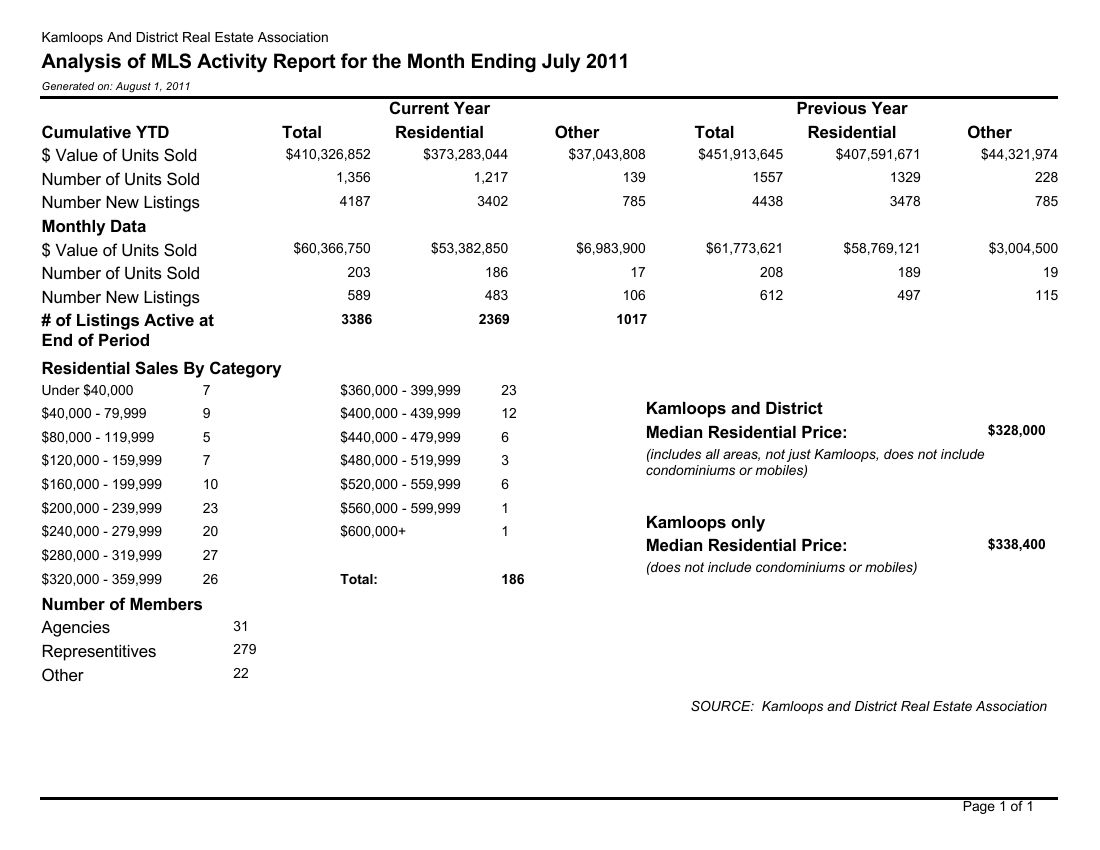
Kamloops and District Real Estate Associations Statistics For December 2010

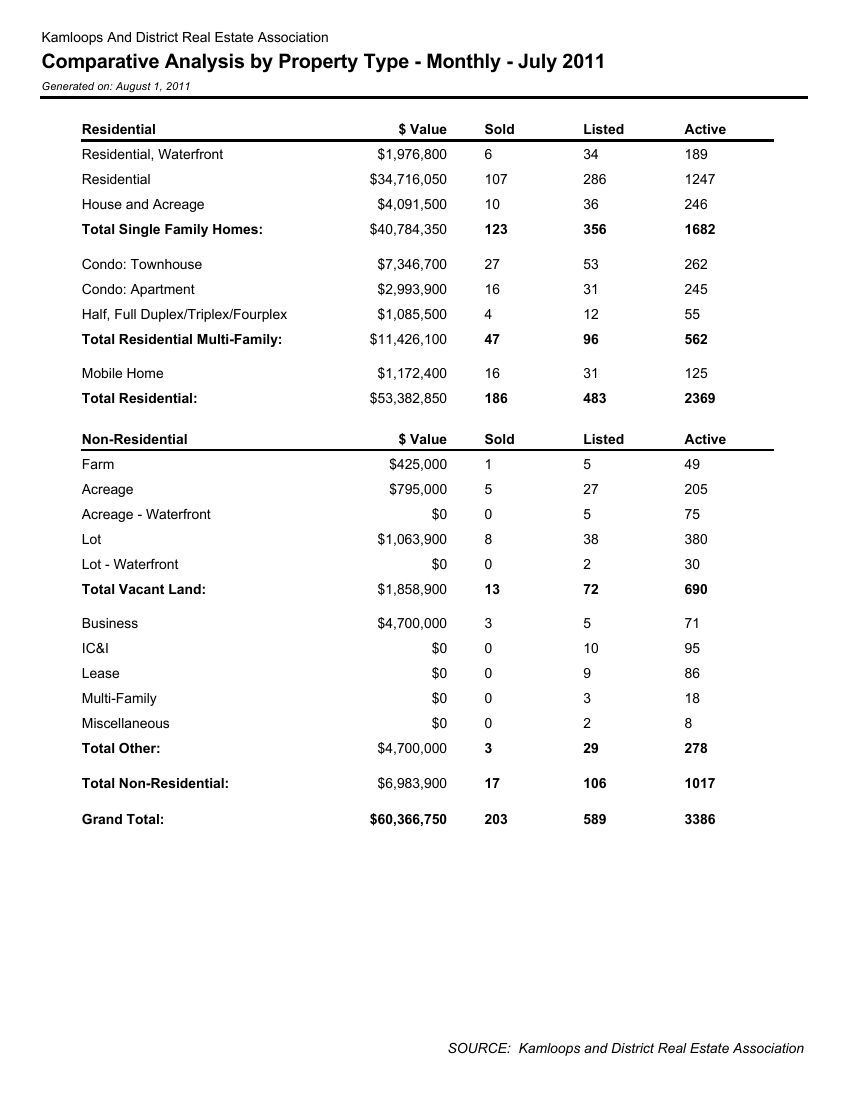
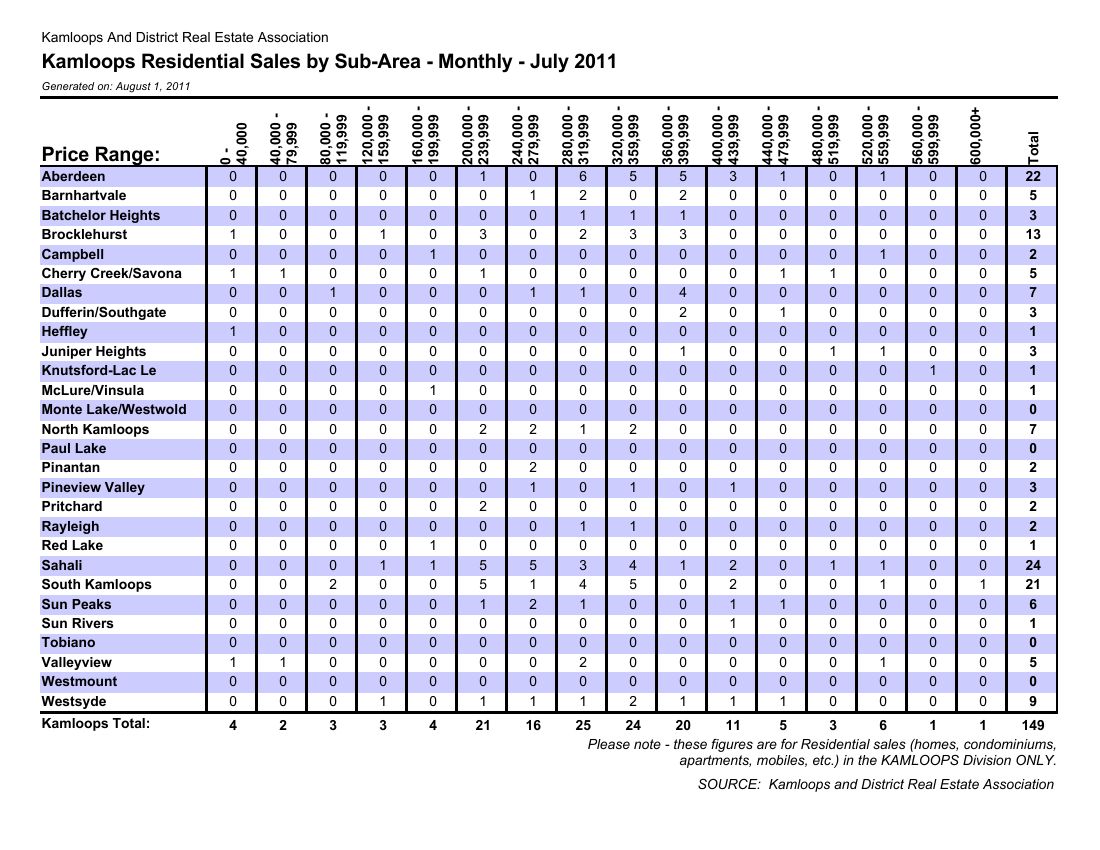
The Kamloops and District Real Estate Association has released the latest sales statistics for December 2010. I have also included the total sales by subarea for the 4th quarter of 2010 and all of 2010. Click on the image below to enlarge.

Comparative analysis by property type December 2010

Kamloops Real Estate Comparative Analysis By Property Type December 2010

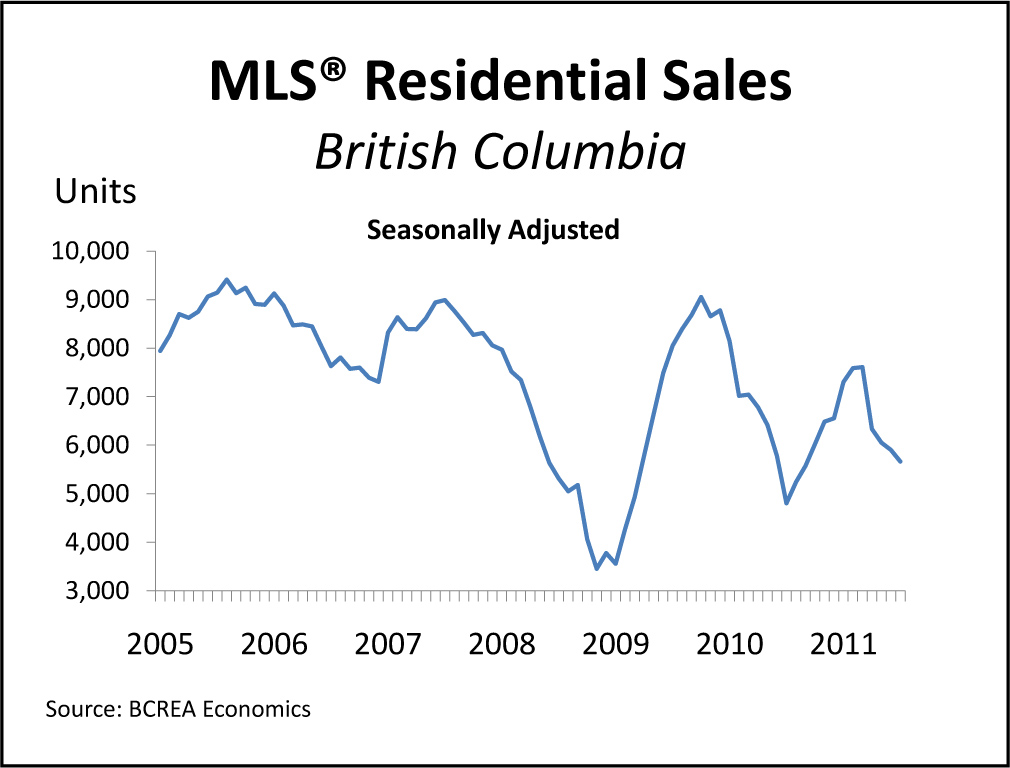
MLS Activity December 2010 Kamloops Real Estate Statistics

Kamloops Real Estate MLS Activity December 2010

Sales by subarea December 2010 Kamloops Real Estate Statistics

Kamloops Real Estate Sales by Subarea December 2010

sales by subarea 4th quarter 2010 Kamloops Real Estate Statistics

Kamloops Real Estate Sales by Subarea 4th Quarter 2010

Sales by subarea 2010 Kamloops Real Estate Statistics

Kamloops Real Estate Sales by Subarea 2010

Kamloops Real Estate: Advice on How To Pick a Realtor That Will Work For You

Kamloops Realtor Kirsten MasonIn a highly competitive real estate market it can be difficult to determine who the best Real Estate Professional would be for your needs. Currently the Kamloops and District Real Estate Association reports that there are just under 300 member Realtors. I have included some pointers below to help you figure out how to find the right professional for you.

1. Interview 2 to 3 Realtor: Analyze their differences and pick the one that you feel most comfortable working with and whom you feel will best represent your interests or needs based on their skill level and experience.

  • For Buyers, you want to ensure that the Realtor will take the time to show you properties when it is convenient for you and will make your search a priority. Go to open houses to informally meet Realtors and strike up a conversation, you will know who you feel comfortable working with after meeting a few professionals.
  • For Sellers, you want a Realtor that has a comprehensive, dynamic and aggressive marketing plan to get your home sold. Communication is paramount and it is important that your listing Realtor maintain open and continual feedback. The most common criticism is “the Realtor posted a sign and I didn’t hear from him/her for 3 months”.

2. Choose a Full Time Realtor: Some Realtors only work part time.  Your largest financial and emotional decision may only be a second career for that part time Realtor. Choose a professional who’s business it is to sell real estate. You wouldn’t choose a part time surgeon to operate on you. A full time Realtor means better market knowledge, better service, better marketing and better negotiating skills which means a better price for you, whether buying or selling.  Ask your potential Realtor:  How often will you hear from them?  Do they have support staff or a team to help them and help you? Are there any days or times during the week that they don’t work? Do they have a part time or other job?

3. Chose a knowledgeable Realtor:  The Realtor you choose should be able to explain the market as it relates to your sale or purchase. Questions you should ask are: Have they sold or listed homes in your area? Are they knowledgeable about the statistics and the direction the market is moving in (buyers or sellers market)?  They should take the time to educate you as to the present market conditions and show you the best way to sell or buy given those conditions and the competition.  They should back up their explanations with current market data and be honest with you in interpreting that data.

4. When listing, Do Not choose a Realtor based on price: When Realtors are competing for a listing, some will give an inflated price just to try to get the listing, only to ask you for a price reduction a few weeks later. Realtors don’t determine the price for your home, the market does that! Often, Realtor’s that don’t have much to offer in terms of experience tend to compete on price.  In other words, what you may gain on perceived higher valuation on your home, you will likely lose in overall sale price due to poor marketing and weak negotiating.  Part of a Realtor’s job is to interpret hundreds of sales as well as active listings. Therefore your prospective Realtor should be able to explain to you what your specific market range is for buying or selling. A good real estate professional knows that every house has a price range which is determined by the seller’s motivation to sell and the buyer’s need to buy. Did you know that 70% of whether or not a property will sell is decided when the price is established. The other 30% is based on the Realtor’s level of competence and negotiating skill.

5. Choose a Realtor based on their success rate:  All Real estate companies have good and bad Realtors. Don’t be afraid to ask a potential Realtor what their sales record was for the past year or two. The Realtor you hire should know how to successfully sell homes and the numbers never lie. You can ask: How many homes did they help their clients to buy and sell? How many days did the average home that they have listed spend on the market? Do they sell in your area or all over? What special awards or recognition have they earned? Do they have any testimonial statements from past clients? Each Realtor’s willingness to share this information with you will help with your overall decision.

6. When Listing, Choose a Realtor based on their marketing strategy:  How much time, how much money and what kind of marketing is your Realtor suggesting for your property?  Every property is different and needs a tailored marketing program to sell it and attract the best buyer willing to pay the highest price.  People don’t buy bricks and mortar, they buy a lifestyle, an environment where they can raise their kids or a location where they can retire in style, with amenities they can use and enjoy. Ensure your Realtor has a comprehensive marketing strategy that targets different medias such as internet, print, local advertising etc.

7. Choose a Realtor that has been recommended by family or friends: Family or friends who’ve had a good experience with a Realtor are your best referral source. A good Realtor will keep in contact with their past clients and ask them for referrals. This is a great place to start when choosing a Real Estate Professional.

8. For Buyers, Pick one Realtor to work with: It is in your best interest to choose one professional to work with. You will develop a relationship with your Realtor and that person will really understand what you want in a property.   You can’t expect a Realtor to give you 100% if you are not willing to commit to them. Realtors only get paid if you buy or sell a property with them, so if you are working with other Realtors all at one time you can’t expect outstanding service based on your lack of loyalty. Find someone that is honest and trustworthy, this will eliminate the need to want to work with other Realtors at one time.

Click here for a free, no obligation home evaluation.

To view all homes for sale in Kamloops click here.

Buying Kamloops Real Estate: Costs, Fees, Taxes and Other Expenses

Once you know what kind of mortgage you want and the price of the house you can afford in Kamloops, you should add up all of the other costs involved in buying a home so that you know the true cost of buying your home.

When you buy a house, it isn’t only the cost of the house that you need to save for. Don’t forget these other costs:

Appraisal Fee
An appraisal is an estimate of the value of the home. Your bank or credit union may require that the property be appraised at your expense.

Deposit
A deposit is required to ensure that the buyer is serious about purchasing the home. It can form part of your down payment, but it must be paid when you make the Offer to Purchase.

Down Payment
You will need a down payment (money paid up front) to obtain a mortgage. With a down payment of 20 per cent or more of the home’s price, you can obtain a conventional mortgage. Your down payment must be at least five per cent of a home’s price for you to benefit from a competitive interest rate.

Mortgage Loan Insurance Premium
If you have less than a 20 per cent down payment, your bank or credit union may require that you buy mortgage loan insurance. You can add the mortgage insurance premium to your mortgage or pay the full amount when you close the sale on the house.

Home Inspection Fee
A home inspection, which costs typically around $500 to $1,000 in Kamloops, is a report on the condition of your home. You may want to make your inspection a condition of your Offer to Purchase, to make sure you are aware of the condition of the house before you agree to buy.

Estoppel Certificate Fee
This fee applies only if you are buying a condominium in a strata development.

GST
This is applicable on new construction typically. GST is 5% of the purchase price. There are thresholds where if GST is applicable the Property Transfer Tax is exempt. GST can also come in the play when a home is used as a business.

Property Transfer Tax
You pay Property Transfer Tax when you purchase or acquire an interest in a property. The tax must be paid when you register changes to a certificate of title with the Land Title Office. The amount of tax due depends on the fair market value of the property that is transferred:

  • If the fair market value is $200,000 or less, the tax is 1% of the fair market value.
  • If the fair market value is greater than $200,000, the tax is 1% of the fair market value up to $200,000, plus 2% on the portion of the fair market value that is greater than $200,000.

First time home buyers are often exempt from this tax.

Prepaid Property Taxes and/or Utility Bills
These charges are meant to reimburse the person who is selling the house for amounts already paid for, such as property taxes, filling the oil tank, etc.

Property Insurance
The insurance covers the cost of replacing the structure of your home and its contents. Property insurance must be in place on the day you close the sale.

Survey or Certificate of Location Cost
The bank or credit union may ask for an up-to-date survey or certificate of location prior to finalizing the mortgage loan. This can range in price.

Legal Fees
These fees must be paid when the sale is completed by a lawyer or notary.

Title Insurance
Your bank or credit union, or lawyer/notary, may suggest insurance to cover any loss caused by problems in the ownership of the property.

Water Tests
If the home has a well, you will want to test the quality and quantity of the water to ensure supply is adequate and the water is drinkable.

Septic Tank
If the house has a septic tank, you will want to have it inspected to make sure it is in good working order.

Other Costs to Consider:

  • Appliances
  • Gardening expenses
  • Snow-clearing equipment
  • Window coverings
  • Decorating materials
  • Moving expenses
  • Renovations or repairs
  • Service hook-up fees
  • Condominium fee

Click here for a printable guide. This information was provided by CMHC and the Government of British Columbia websites.

1 191 192 193 194 195 219