BCREA Housing Market Update for April 2017
BC Real Estate Association (BCREA) Economist Brendon Ogmundson discusses the March 2017 statistics.
MLS Listings, News & Statistics

BC Real Estate Association (BCREA) Economist Brendon Ogmundson discusses the March 2017 statistics.
Vancouver, BC – April 13, 2017. The British Columbia Real Estate Association (BCREA) reports that a total of 9,826 residential unit sales were recorded by the Multiple Listing Service® (MLS®) in March, down 21.8 per cent from the same period last year. Total sales dollar volume was $6.79 billion, down 30 per cent from March 2016. The average MLS® residential price in the province was $690,597, a 10.5 per cent decrease from the same period last year.
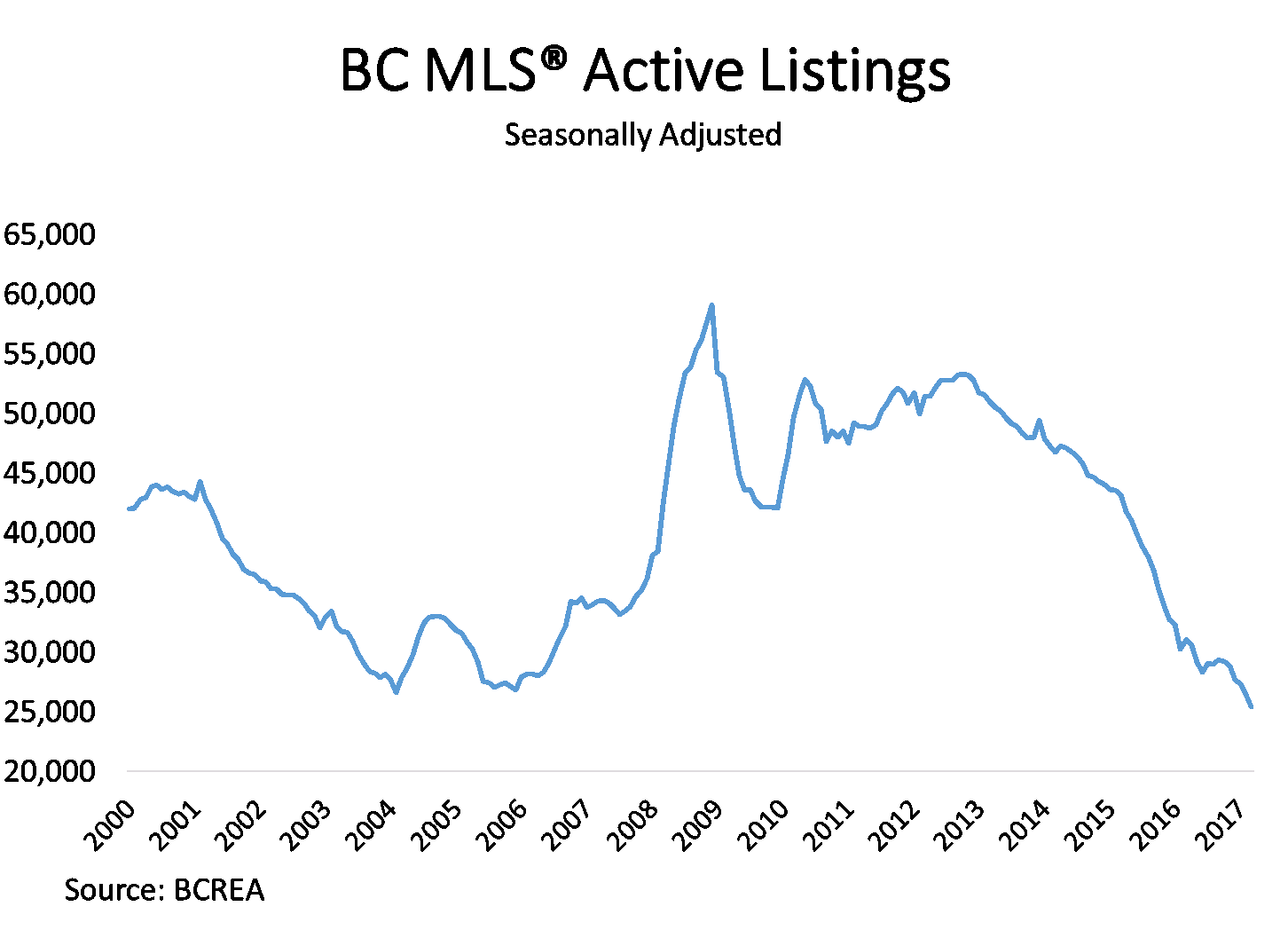 “Consumer demand continues to normalize following blockbuster home sales in 2016,” says Brendon Ogmundson, BCREA Economist. “However, the supply of homes available for sale has not recovered and is still declining in many markets around the province.”
Although the average price in BC was down year-over-year due to a shift in the composition of sales away from higher-priced homes in Greater Vancouver, home prices in most markets are being pushed higher due to severe supply constraints. This is particularly true for the Victoria region, which currently has just over one month of inventory for sale, as well as for the apartment and townhouse market in the Lower Mainland.
Year-to-date, BC residential sales dollar volume was down 34.7 per cent to $14.1 billion, when compared with the same period in 2016. Residential unit sales declined 25.5 per cent to 20,893 units, while the average MLS® residential price was down 12.4 per cent to $674,856.
The Kamloops District Real Estate Association has released the latest Statistics for March 2017. Click on the image below to enlarge or PDF documents included in the links below.
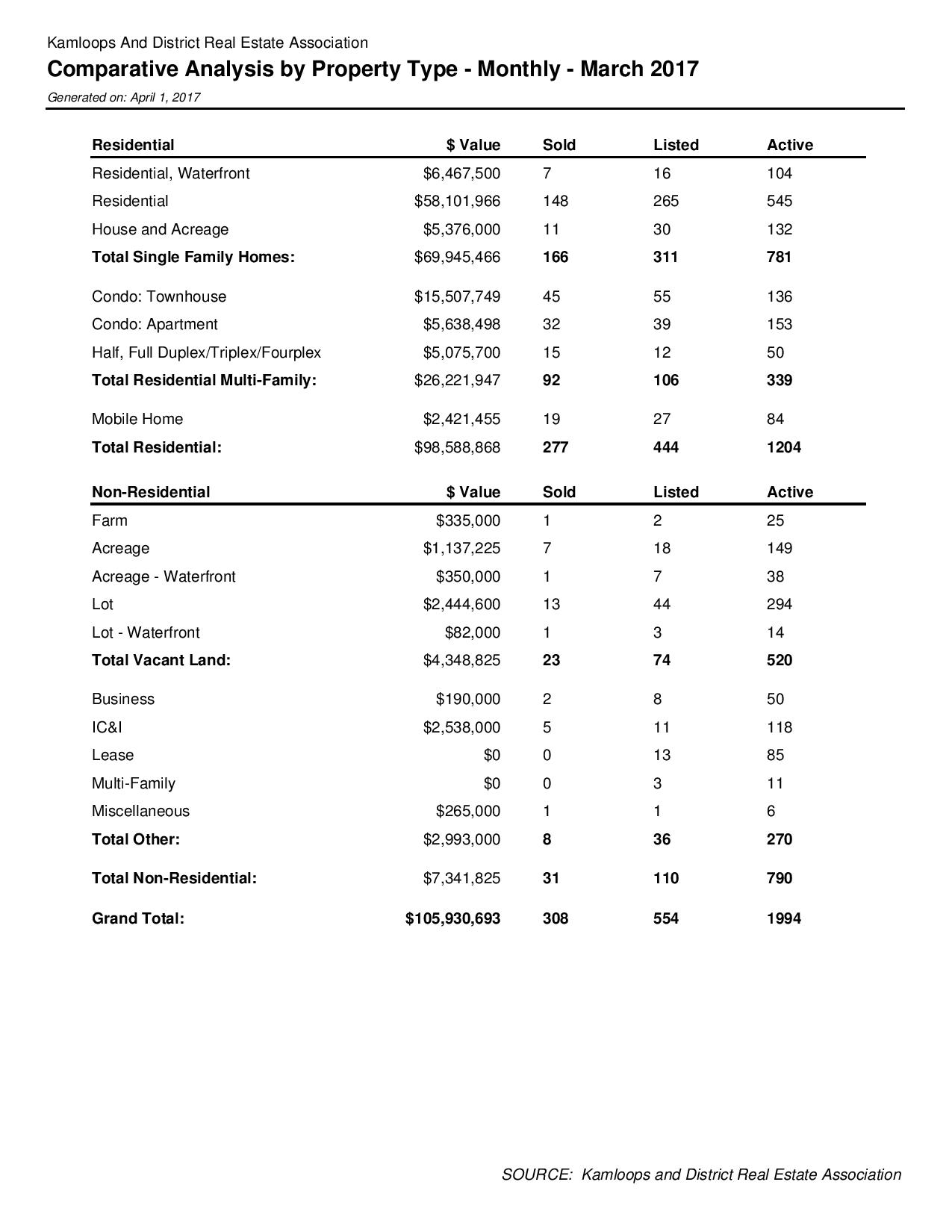
Kamloops Real Estate Comparative analysis by property type March 2017
PDF:Comparative analysis by property type March 2017
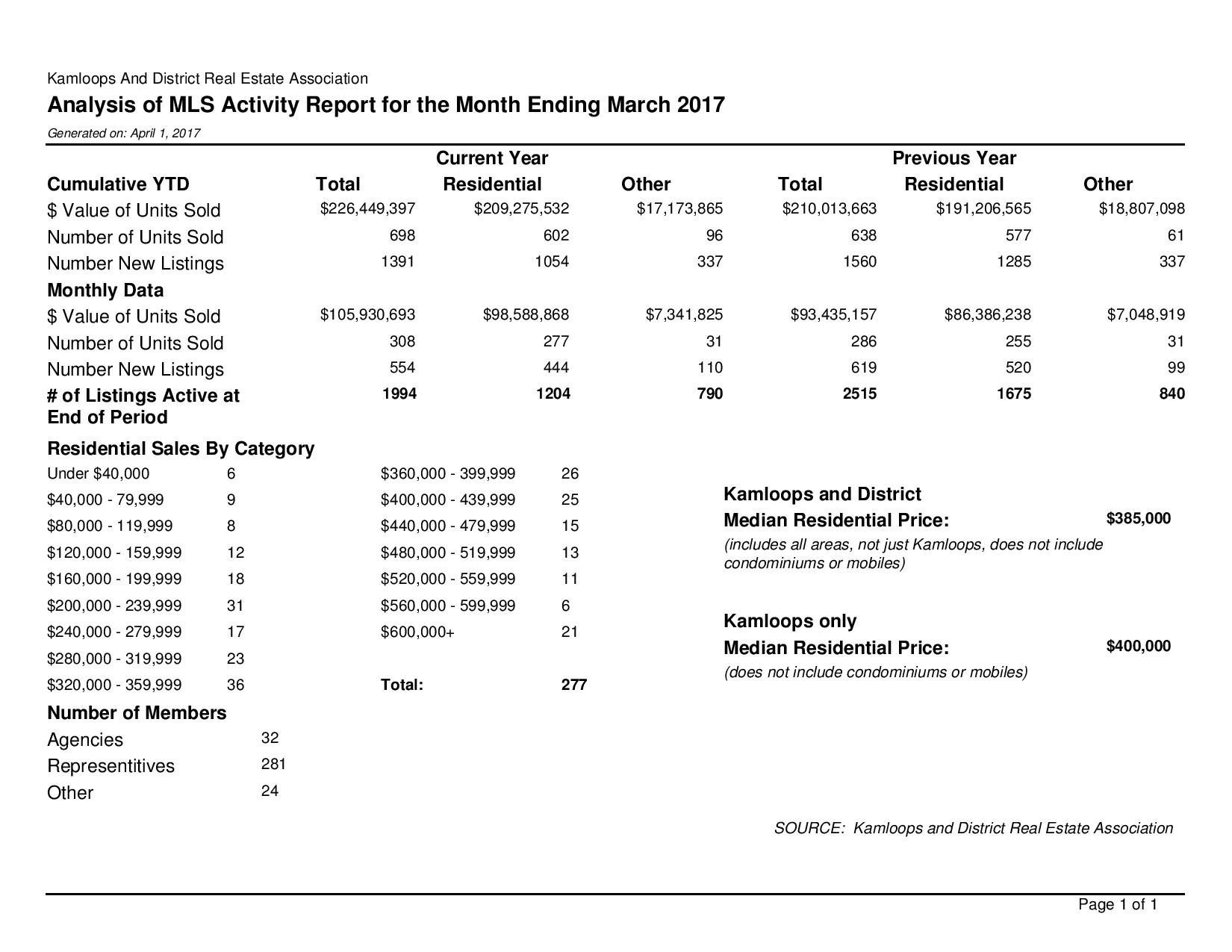
Kamloops Real Estate MLS Activity March 2017
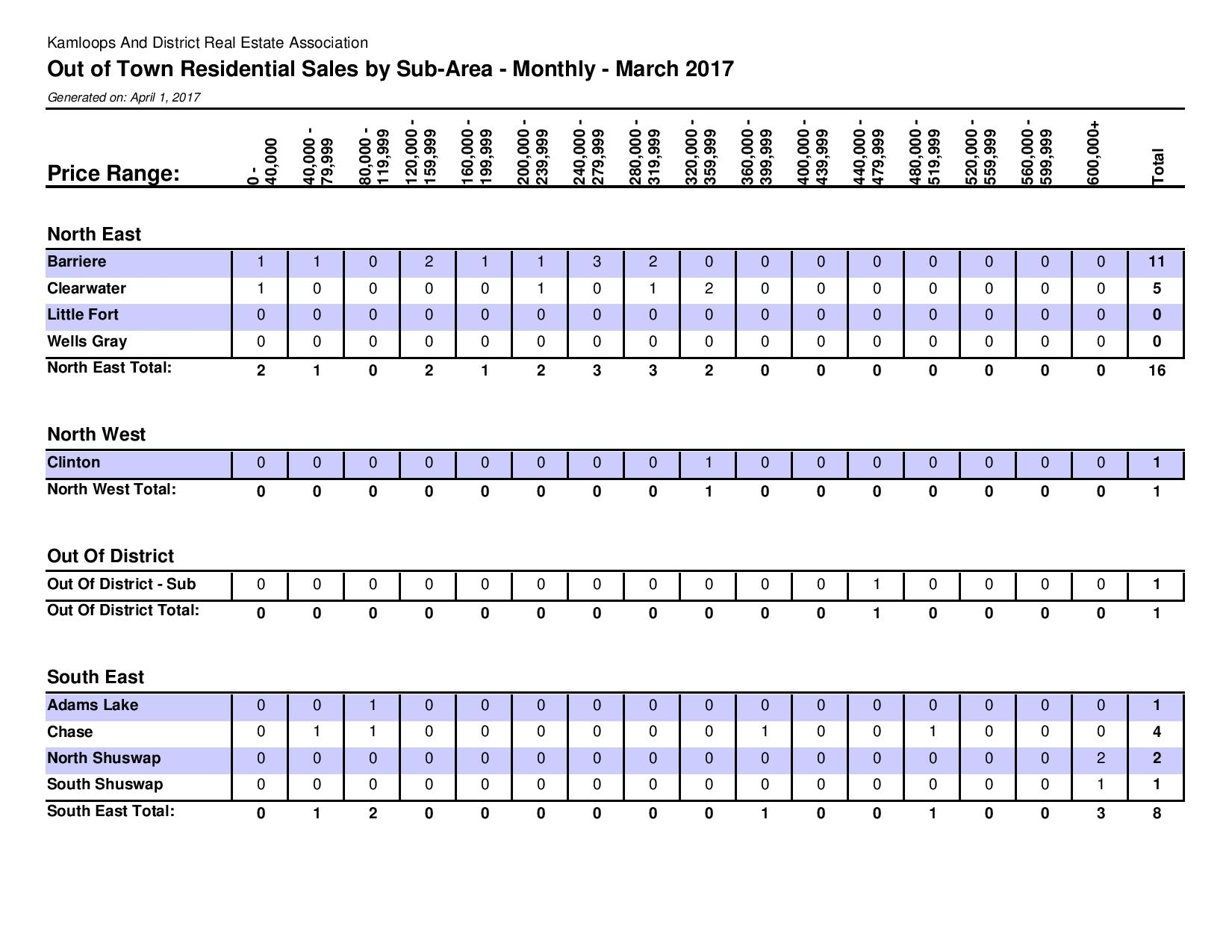
Out of town Sales by Subarea March 2017
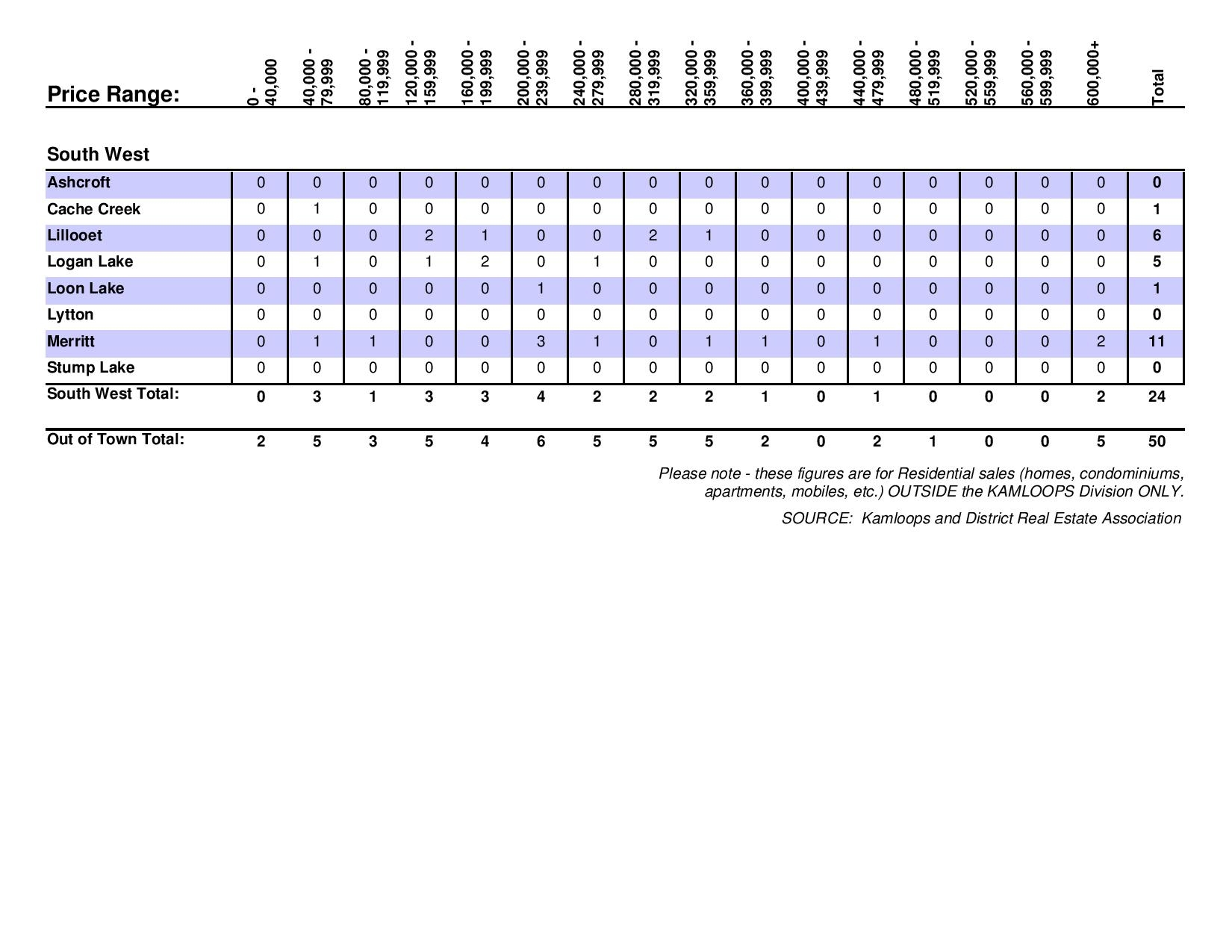
Out of town Sales by Subarea March 2017
PDF: Out of town Sales by Subarea March 2017
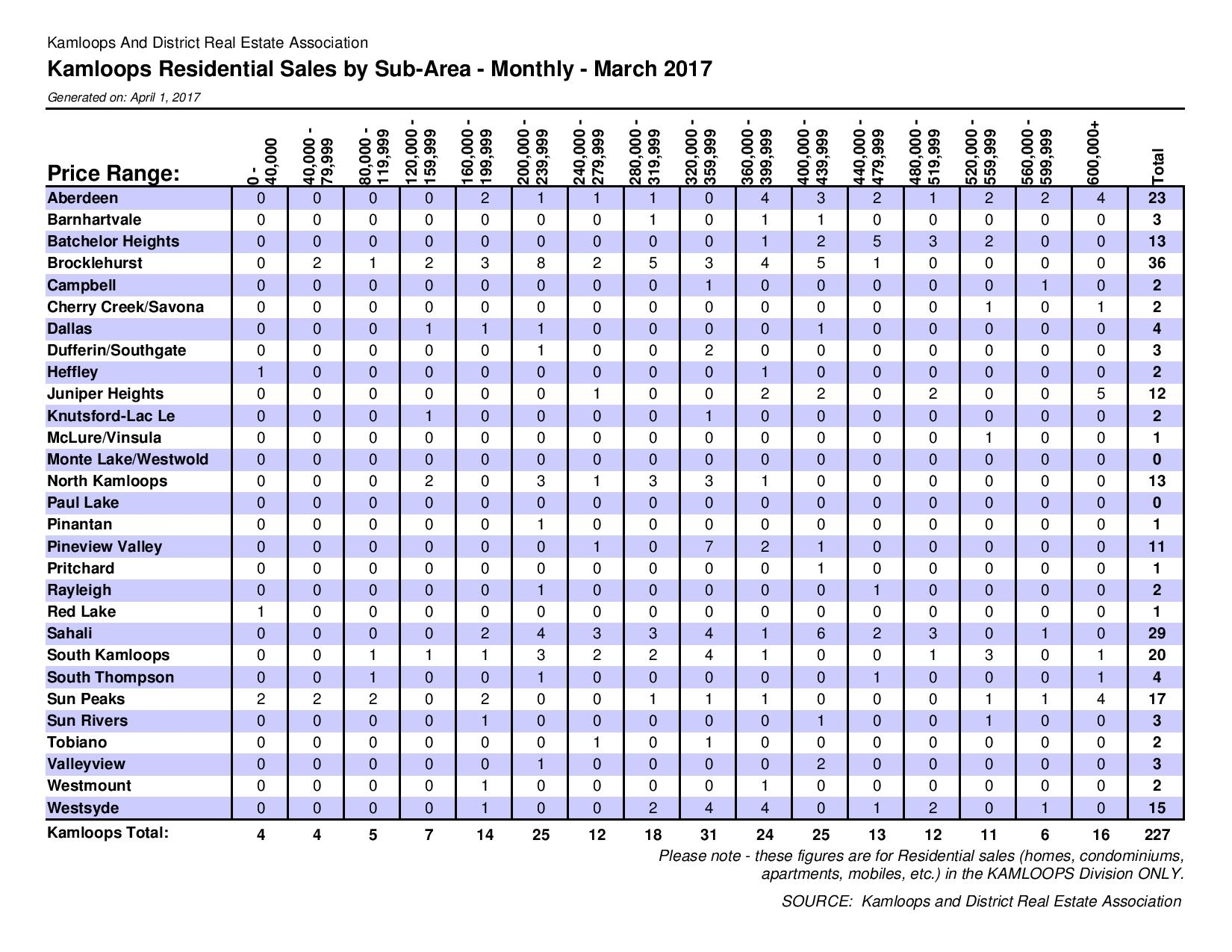
Kamloops Real Estate Statistics Sales by Subarea March 2017
PDF: Sales by subarea March 2017
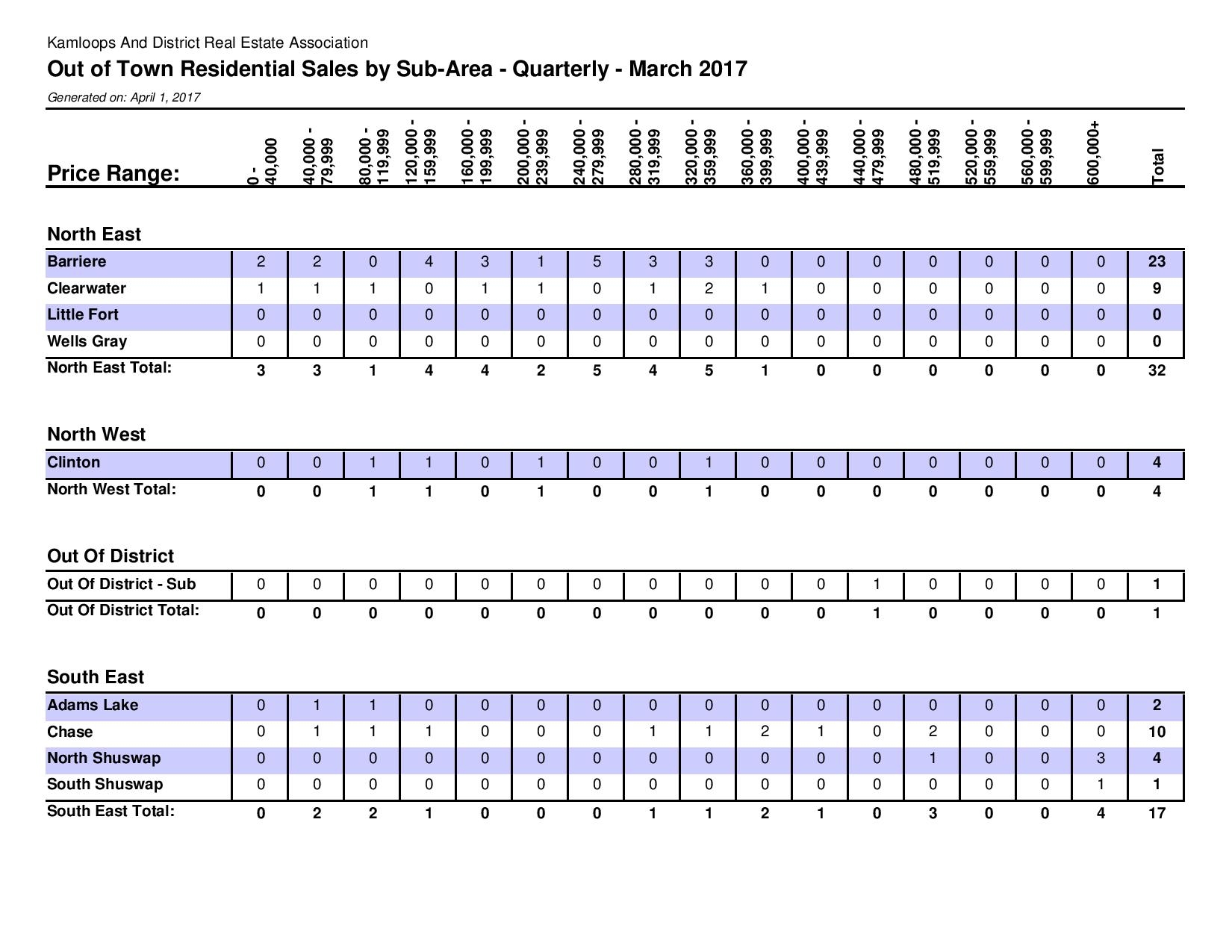
Out of town Sales by Subarea March 2017 Quarterly first quarter
The BCREA released it’s latest housing market update. BC Real Estate Association Chief Economist Cameron Muir discusses the February 2017 statistics.