This article was written by Jeremy Deutsch of Kamloops This Week on January 9th, 2012.
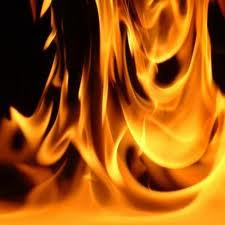
For some, a mobile home is an affordable alternative to buying a house or an apartment.
But, when a fire breaks out, they can be particularly deadly — especially older mobile units.
“They are a concern to us,” Kamloops Fire Rescue Chief Neill Moroz told KTW.
He said the problems tend to arise in older units that have a wood-panelling finish on the interior, because a fire can spread faster than in new models built with drywall.
Mobile homes in general also tend to be smaller and more confined, which can make it harder to escape, while putting occupants closer to flammable material.
Older units have become such a concern in recent weeks that the B.C. Coroners Service and Office of the Fire Commission have taken the unusual step of issuing safety warnings to owners and operators of mobile-home parks in the province.
The two provincial organizations noted studies that show fires in mobile homes tend to be more devastating than in other forms of housing.
The warnings come after seven people were killed in a five-day span in five separate fires around B.C. at the end of 2011.
One of the fires in Sicamous took the life of a father and his two young children.
Mobile-home fires can also be a challenge for firefighters due to the speed in which the units burn.
“When a fire reaches a certain point, it’s extremely dangerous for our firefighters to enter,” Moroz said.
There are steps mobile-home owners can take to reduce the fire risk.
Moroz said every unit should have working smoke detectors and occupants should have a way of getting out from every room.
The B.C. Coroners Service has also put together several recommendations, including:
• Have furnaces inspected at least once a year and clean the blower and filters often to prevent overheating.
• Keep the furnace area clear of clutter.
• Ensure electrical wiring and appliances are in good working order.
• Watch for signs of wiring trouble, including flickering lights for no apparent reason; warm, inoperable, strange-smelling or discoloured switch plates or outlets; sparking or electrical arcing; or a blown fuse or tripped circuit breaker.
• Never run extension cords under rugs.
• Avoid the use of space heaters if at all possible. If it is essential to use one, use a CSA-approved model and ensure it is well away from drapes, bedding, clothing and other flammable materials.
• Consideration should be given to replacing wood-based combustible wall coverings with gypsum board products, which slow the progression of fire.
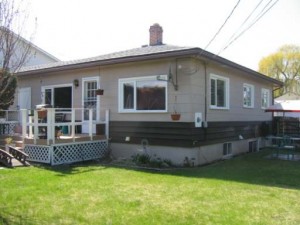
Great Brock bungalow with 2 spacious bedrooms on the main floor and a large two bedroom inlaw suite downstairs. The main floor has a large kitchen, spacious mud room/laundry room and living room. Recent updates include HW tank (6 months), Roof (last 5 years), paint and flooring. There are two parking areas to accommodate all residents and RV parking as well. Fully fenced private yard. Steps from the elementary school, secondary school and transportation. Very close to McArthur Island recreation and shopping. Minimum 24 hours notice for all showings. Tenanted up and down, upstairs tenants pay $1050/month and basement $925/month including utilities.
To view all homes for sale in Kamloops click here.
Barriere is located 45 minutes or 66 kilometers north of the city of Kamloops along the Yellowhead Highway #5. Barriere officially became a municipality on December 4th, 2007 and has it’s own city centre that has everything you would need. The population of Barriere is approximately 3,000. The main industry in Barriere is forestry but tourism has increased allowing for another industry to emerge. The Thompson Valley Rodeo is one of the events in Barriere that draws quite a crowd. Barriere has a number of lakes in the area to enjoy many that feature white sand beaches.
Barriere properties in and around the city centre are serviced by the Barriere water system. Rural properties, acreages and recreational properties are served by community water systems or private wells. All properties at this point are on a septic system. There are phone, cable and internet services to most areas. There is not any natural gas at this point but there is hydro to the majority of properties.
The Thompson Nicola Regional District (TNRD) manages the solid waste in the area and the District of Barriere offers curbside garbage pick up for some residents depending on location. Barriere does have a dump site on Barriere Lakes Road.
Properties & Real Estate
Barriere has a range of properties such as mobile homes in a park, a few townhouses and duplex homes, homes on smaller residential lots, small to large acreages and recreational lakefront properties.
Mobile home parks are mainly found near Barriere Town Road in the city centre. There are often a few of mobile homes on the market to choose from.
Most of the smaller residential lots are also found close to Barriere city centre. The newest development is found near the corner of Barriere Town Road (Northern access) and the Yellowhead Highway #5. This is where you will find the newest homes as well as serviced lots ready for new homes. Other roads such as Amnesty Road, McLean Road, Gibbs Road, Oriole Way, Deejay Road, Barkley Road, Mountain Road, Dunsmuir Road and Bartlett Road house residential properties that are under one acre in size.
Acreages of all sizes are found all over Barriere and continue towards Darfield and Little Fort which are areas north of the city centre. There are a number of these properties found along the Yellowhead Highway but they can also be found on Barriere Lakes Road, Agate Bay Road and Dunn Lake Road to name a few. Alfalfa is the primary crop grown on farms and many properties house cattle and other livestock. Many acreages are located close to Barriere city centre allowing owners to have access to the essentials.
Recreational properties are found mostly on East and North Barriere Lakes. East Barriere Lake houses more recreational property development than North Barriere. There are a variety of properties on both lakes from resort type strata developments to more private larger lake front lots. Both lakes have public boat launches and white sand beaches. Click the following links for more information about East Barriere Lake or North Barriere Lake. Access to these lakes is along Barriere Lakes Road.
Click hereto view homes for sale in the Barriere area.
Shopping & Services
Barriere has it’s own shopping district with a mid sized grocery store , drug store, post office, Liquor store, Hardware store, Building Supplies Centre, a couple restaurants/fast food, gas stations and other small business. The majority of businesses are found on Barriere Town Road and the Yellowhead Highway.
The closest hospitals to Barriere are either Royal Inland Hospital in Kamloops or Dr. Helmcken Memorial Hospital in Clearwater. There are local health professionals in Barriere such as a Doctor, Massage Therapist and more.
Barriere has many other services such as automotive, computer, internet, financial, churches, etc. Barriere is only about 45 minutes to Kamloops so many residents regularly visit to do large shopping runs and run errands.
Schools
Barriere has an elementary and secondary school. Both schools are located on Barriere Town Road. Click here for more information about the schools in Barriere.
There is also continuing online training @KOOL (Kamloops Open Online Learning) which also offers courses for students kindergarten through to grade 12.
The nearest post secondary school is Thompsons River University in Kamloops. TRU has a regional centre in Barriere but it’s main campus is in Kamloops. TRU also offer Open Learning where students can take courses by correspondence.
Recreation
There are numerous outdoors activities that can be enjoyed in Barriere. This regions is known as an outdoors paradise year round. Residents and visitors in the winter enjoy world class snowmobiling, cross country skiing, snowshoeing, ice fishing, skating (on frozen lakes) and any other winter activities you can think of. Sun Peaks ski resort, a year round resort is a 45 minute drive from Barriere adding more recreational activities to the already long list.
Other recreational activities in Barriere are curling, golf at Chinook Cove Golf Course, ball parks, horseshoe pits, tennis courts, hiking and riding trails, swimming, fishing, boating, camping and much more.
The lakes in Barriere are considered some of the best in BC. East and North Barriere Lakes are great for power boating activities as they are not very busy and are known for warmer waters making swimming more enjoyable. Click on the following links to read more about East Barriere Lake or North Barriere Lake.
Click here to view homes for sale in the Barriere area.
To read more about other neighbourhoods click the link below:
The areas Vinsula and McLure are located 25 minutes or approximately 48 kilometers north of the city of Kamloops. Vinsula is located minutes after the Sun Peaks Resort exit in Heffley Creek (33 Kilometers from Kamloops). The area of McLure follows Vinsula and is about 48 kilometers north of Kamloops or 23 kilometers south of Barriere.
These areas mainly consist of small acreages, farms, ranches and some smaller residential parcels. McLure and Vinsula are bordered by the North arm of the Thompson River. McLure is the home of Kamloops’ only river ferry. This small ferry transports vehicles between McLure and the northern area of Westsyde. Access to the ferry is off of McLure Ferry Road that intersects with the Yellowhead Highway #5. The ferry has a load capacity of two vehicles or 12 passengers.
Properties & Real Estate
Properties in the areas of McLure and Vinsula mainly consist of small to large acreages. These areas are split by the Yellowhead Highway #5 and are easily accessible from the Highway. Most properties sit near to the North Thompson River in the valley between the river to the west and hills to the east. There are some properties located along dirt roads in McLure and Vinsula such as Vinsula Knouff Lake Road. There are some smaller properties that are one acre in size or smaller and they are on mainly Pinegrove Road in McLure. Smaller acreages are found on Walterdale Road, Glengrove Road, McLure Ferry Road and Kealty Road to name a few. The remainder of the properties in the area are quarter sections or larger that house livestock or grow hay.
There are not any multi-family properties, mobile home parks or smaller residential lots in these areas.
Click here to view homes for sale in the McLure and Vinsula area.
Shopping
Main shopping is in the city of Kamloops and is within a 25 to 30 minute drive. There is a restaurant in McLure, a small gas station and convenience store in Heffley (5 to 10 minutes from McLure/Vinsula), a small seasonal corner store at the Pinegrove Camp Ground (open Spring/Summer) and a gas station/convenience store in Rayleigh (10 to 15 minutes). There is also a fruit stand that is located on the corner of McLure Ferry Road and the Yellowhead Highway #5.
Schools
Students who live in the McLure and Vinsula area attend the Heffley Creek Elementary school or one of many high schools in Kamloops. There is school bus service from McLure and Vinsula and not all children attend school in Heffley as some parents choose to send them to other schools in the area such as Rayleigh Elementary. To view further information about schools click here.
Recreation
There are many outdoors activities to enjoy in this region. Hiking, cross country skiing, snow shoeing, motor sports such as dirt biking, ATVing or snowmobiling, trail riding, fishing and more. This area is very close to many fishing lakes such as Knouff Lake, Heffley Lake and Sullivan Lake. Big Heffley Lake is also within 20 minutes where watersports are enjoyed in the warmer months and ice fishing, snowmobiling and cross country skiing in the winter months.
McLure and Vinsula are within 30 minutes of Sun Peaks resort which is an all seasons resort with downhill skiing/snowboarding in the winter and mountain biking in the summer. Many lakes are also very close for swimming, fishing and boating.
Click here to view homes for sale in the McLure and Vinsula area.
To read more about other neighbourhoods click the link below:
 For some, a mobile home is an affordable alternative to buying a house or an apartment.
 Great Brock bungalow with 2 spacious bedrooms on the main floor and a large two bedroom inlaw suite downstairs. The main floor has a large kitchen, spacious mud room/laundry room and living room. Recent updates include HW tank (6 months), Roof (last 5 years), paint and flooring. There are two parking areas to accommodate all residents and RV parking as well. Fully fenced private yard. Steps from the elementary school, secondary school and transportation. Very close to McArthur Island recreation and shopping. Minimum 24 hours notice for all showings. Tenanted up and down, upstairs tenants pay $1050/month and basement $925/month including utilities.
 Barriere is located 45 minutes or 66 kilometers north of the city of Kamloops along the Yellowhead Highway #5. Barriere officially became a municipality on December 4th, 2007 and has it’s own city centre that has everything you would need. The population of Barriere is approximately 3,000. The main industry in Barriere is forestry but tourism has increased allowing for another industry to emerge. The Thompson Valley Rodeo is one of the events in Barriere that draws quite a crowd. Barriere has a number of lakes in the area to enjoy many that feature white sand beaches.
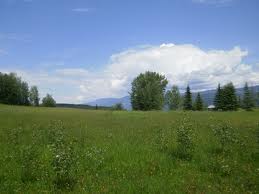 Barriere has a range of properties such as mobile homes in a park, a few townhouses and duplex homes, homes on smaller residential lots, small to large acreages and recreational lakefront properties.
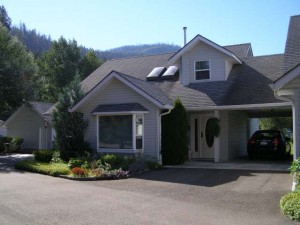 Most of the smaller residential lots are also found close to Barriere city centre. The newest development is found near the corner of Barriere Town Road (Northern access) and the Yellowhead Highway #5. This is where you will find the newest homes as well as serviced lots ready for new homes. Other roads such as Amnesty Road, McLean Road, Gibbs Road, Oriole Way, Deejay Road, Barkley Road, Mountain Road, Dunsmuir Road and Bartlett Road house residential properties that are under one acre in size.
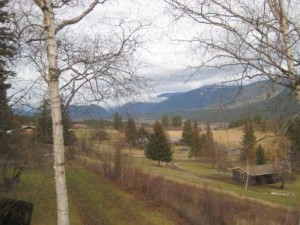 There are a number of these properties found along the Yellowhead Highway but they can also be found on Barriere Lakes Road, Agate Bay Road and Dunn Lake Road to name a few. Alfalfa is the primary crop grown on farms and many properties house cattle and other livestock. Many acreages are located close to Barriere city centre allowing owners to have access to the essentials.
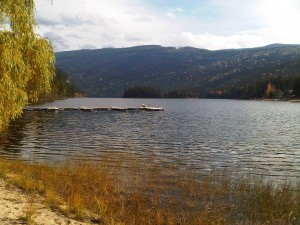 East and North Barriere Lakes. East Barriere Lake houses more recreational property development than North Barriere. There are a variety of properties on both lakes from resort type strata developments to more private larger lake front lots. Both lakes have public boat launches and white sand beaches. Click the following links for more information about
 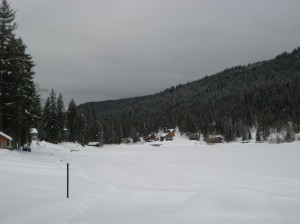 There are numerous outdoors activities that can be enjoyed in Barriere. This regions is known as an outdoors paradise year round. Residents and visitors in the winter enjoy world class snowmobiling, cross country skiing, snowshoeing, ice fishing, skating (on frozen lakes) and any other winter activities you can think of. Sun Peaks ski resort, a year round resort is a 45 minute drive from Barriere adding more recreational activities to the already long list.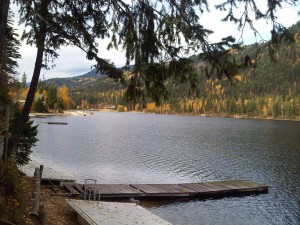
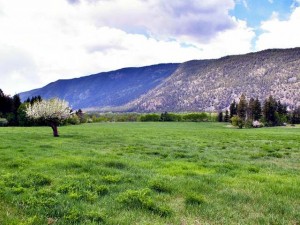 The areas Vinsula and McLure are located 25 minutes or approximately 48 kilometers north of the city of Kamloops. Vinsula is located minutes after the Sun Peaks Resort exit in Heffley Creek (33 Kilometers from Kamloops). The area of McLure follows Vinsula and is about 48 kilometers north of Kamloops or 23 kilometers south of Barriere.
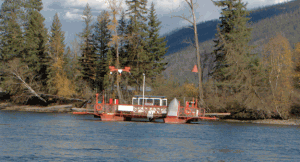 farms, ranches and some smaller residential parcels. McLure and Vinsula are bordered by the North arm of the Thompson River. McLure is the home of Kamloops’ only
 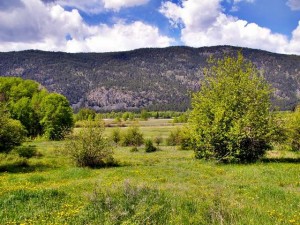 Properties in the areas of McLure and Vinsula mainly consist of small to large acreages. These areas are split by the Yellowhead Highway #5 and are easily accessible from the Highway. Most properties sit near to the North Thompson River in the valley between the river to the west and hills to the east. There are some properties located along dirt roads in McLure and Vinsula such as Vinsula Knouff Lake Road. There are some smaller properties that are one acre in size or smaller and they are on mainly Pinegrove Road in McLure. Smaller acreages are found on Walterdale Road, Glengrove Road, McLure Ferry Road and Kealty Road to name a few. The remainder of the properties in the area are quarter sections or larger that house livestock or grow hay.
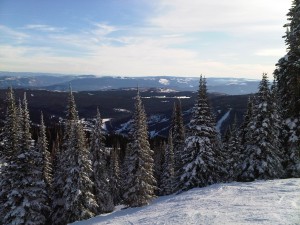 There are many outdoors activities to enjoy in this region. Hiking, cross country skiing, snow shoeing, motor sports such as dirt biking, ATVing or snowmobiling, trail riding, fishing and more. This area is very close to many fishing lakes such as Knouff Lake, Heffley Lake and Sullivan Lake. Big Heffley Lake is also within 20 minutes where watersports are enjoyed in the warmer months and ice fishing, snowmobiling and cross country skiing in the winter months.