This article appeared on the Huffington Post on January 31st, 2012 and was written by Craig Wong.
OTTAWA – A federal limit on the amount of loans Canada Mortgage and Housing Corp. is allowed to insure could lead to stricter lending conditions and a cooling of the housing market, TD Bank economist Sonya Gulati said Tuesday.
“It may serve to tighten the housing market,” Gulati said.
CMHC had insured $541 billion in loans at Sept. 30, compared with $501 billion a year earlier and $514 billion as of Dec. 31, 2010. The limit was raised to $600 billion in total outstanding insured amounts from $450 billion in 2008.
Although Ottawa could increase the limit, as it did in 2008 in the wake of the financial crisis, it may not want to if it thinks too many people are borrowing more than they should, Gulati said.
Canadian mortgage rates have been near record lows in recent months. Earlier this month, some of Canada’s biggest banks began advertising promotional ultra-low fixed rate mortgages at 2.99 per cent for five years.
“If there are indications from the government perspective that there is overheating, one of the mechanisms can be to change mortgage eligibility rules,” Gulati said.
“Another way is to restrict or to indirectly make getting a mortgage tougher.”
Homebuyers who put down less than 20 per cent are required to pay for mortgage default insurance.
However, financial institutions may also take out mortgage default insurance where the borrowers put down more than the minimum required to avoid the mandatory insurance. The move allows banks to more easily bundle the mortgages and raise money on the capital markets with covered bonds backed by the mortgages.
CMHC said Tuesday it has recently received an unexpected level of requests for large amounts of CMHC portfolio insurance, which allows lenders to buy insurance on pools of previously uninsured low ratio mortgages.
“To ensure equitable access to portfolio insurance within CMHC’s annual limits, an allocation process is being established which has caused some delays,” the federal agency said.
CMHC noted that it does not affect the availability of CMHC’s mortgage loan insurance for qualified home buyers and would not impact the cost of buying a house.
RBC economist Robert Hogue noted that the government could raise the CMHC limit, but it is walking a fine line to keep the housing market from slowing too much or overheating.
“We’re looking for a middle of the road kind of performance so it would be, policywise, a very delicate balance to strike,” he said.
“I’m sure any kind of signal that might spook the housing market would be considered very prudently and at the same time, if there is any sign the market is starting to demonstrate signs it is going overboard it might want to find ways to cool it.”
Finance Minister Jim Flaherty and Bank of Canada governor Mark Carney have been warning for months that Canadians have been racking up more debt than they can sustain as a result of a long period of ultra-low interest rates.
Ottawa has been tightening mortgage lending rules in recent years in the effort to limit the dangers of a crisis in the real estate market in Canada.
Last year, the federal government reduced the maximum amortization period for new government-backed insured high-ratio mortgages to 30 years from 35 years and cut the maximum amount Canadians can borrow in refinancing their mortgages to 85 per cent from 90 per cent.
The government has also withdrawn insurance backing on non-amortizing home equity lines of credit.
Link

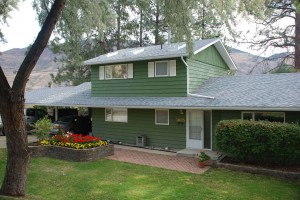 Gorgeous panoramic view, quiet setting with sense of privacy, close to school, pool and shopping. This house has close to 3700 finished sq ft. Large bedrooms, kitchen and living spaces throughout. Huge master with dressing area upstairs could be converted to a fabulous bonus room. Beautiful almost 1/4 acre treed yard for privacy, play or toys. Yard is nicely landscaped with elegant gardens, shrubs and a greenhouse for those new plants. House also has a good size attached workshop/storage room. House does need some updating, but loaded with potential.
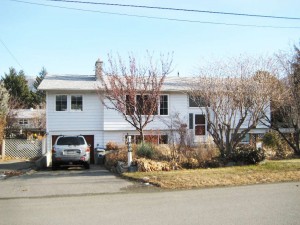 Great North Kamloops home in a quiet neighbourhood close to shopping and transportation. Many recent updates including all windows, furnace (2 years), h/w tank (2 years), roof (8 years), flooring (hardwood, lino and carpet), paint, main floor bathroom and more. There is central a/c, all appliances are included and window coverings. 2 bedrooms on the main floor with a large family room off of the living room and dining room. The family room could be converted to an office/3rd bedroom. There are 2 bedrooms in the basement, with a 3 piece bathroom, large rec room, spacious laundry room and separate basement entry. Three fireplaces (2 wood, 1 gas), large yard with mature fruit trees, gardens and mostly fenced. There is a single car garage that is extra long. This is a great family home ready for its new family. All measurement are approx.