This article appeared on CBC News on January 3rd, 2012.
The B.C. government has raised the threshold for homeowner property grant to $1.285 million to accommodate rising property values.
The news comes as hundreds of thousands of annual property assessments are being prepared for B.C. property owners by the government. Last year, the threshold was $1.15 million. The grant effectively reduces the property tax paid by most B.C. homeowners by up to $1,045
Every year the province adjusts the grant to ensure 95.5 per cent of homeowners receive the full amount of the grant. Those with homes above the threshold may still be eligible for part of the grant.
“The homeowner grant provides a maximum reduction in residential property taxes on principal residences of $570 in the Capital, Greater Vancouver and Fraser Valley regional districts and $770 elsewhere in the province,” said a statement issued by the government on Tuesday.
“An additional grant of $275 is available to those who are age 65 or over, permanently disabled or a veteran of certain wars,.”
“We continue to see challenging economic times around the world. By maintaining the homeowner grant, we continue to help families with the costs of owning their homes,” said Finance Minister Kevin Falcon in the statement.
The grant is only available to Canadian citizens and to landed immigrants who normally reside in B.C.
This article appeared in the Globe and Mail on December 30th, 2011 and was written by Katherine Scarrow.
As global housing markets coughed and sputtered in 2011, Canada’s barrelled ahead, even turning a few nervous heads along the way.
In fact, recently the Economist branded Canada one of the nine countries where “home prices are overvalued by about 25 per cent or more,” and among the four where prices are in line with those in the United States “at the peak of its bubble.”
Is there really a cause for alarm? Are we doomed to ride this white-knuckled roller coaster in 2012? Probably not, according to Benjamin Tal, deputy chief economist of CIBC.
“The housing market of tomorrow will not be as exciting as the housing market of yesterday,” he said in an interview.
While the current real estate market is overshooting, with home prices far higher than than they should be, we shouldn’t expect a crash either, he explains. As long as interest rates remain relatively low and subprime mortgages kept at bay, the most likely scenario is that the market will plateau.
“Prices are already softening, housing starts aren’t in the sky, MLS [multiple listing service] activity is starting to soften, so it suggests the market is already starting to level off, and that’s what we need,” he said.
How will a more relaxed real estate market affect new home buyers, investors and renovators in 2012? Here are Mr. Tal’s predictions:
1. First-time home buyers
Affordability and interest rates will be the major concerns in 2012. Prices will continue to be expensive, especially in urban centres like Vancouver and Toronto, since interest rates are likely to remain low for the time being.
But rates won’t stay low forever, which is why you should estimate mortgage payments based on interest rates that are 2 or 3 percentage points higher than current interest rates, and if you cannot afford that, get a smaller mortgage and buy a less expensive house.
Expect an end to bidding wars, or at least a temporary ceasefire. New home buyers will have the luxury of time in terms of looking at properties without being rushed into decisions. That’s the positive. The negative is that prices continue to be drastically higher than they were five or 10 years ago.
2. Investors and flippers
If you’re in it to flip it – meaning you buy a home hoping the price will rise by just doing minimal changes – those days are over.
In some pockets of the country, you may even see prices go down.
3. Renovators
The cost of renovations will not increase significantly so long as interest rates remain at their current level, so it’s a good idea to take advantage of this time to finance these projects.
For those looking to take on a second mortgage, remember to make sure you’re equipped to finance them if interest rates creep up.
Variable-rate mortgages are still a good option for those who are able to withstand fluctuations in the market and “ride the ups and downs without getting a stomach ache.”
Pritchard is located 30 minutes or 39 kilometers south east of the City of Kamloops. The majority of the properties in Pritchard are small to large acreages. There is one area where smaller city lots exist (approximately 0.25 acre lots) and are largely dominated by modular or manufactured homes. Pritchard is a rural area with few amenities close. There are a lot of recreational, outdoor activities that are easily accessible in Pritchard area.
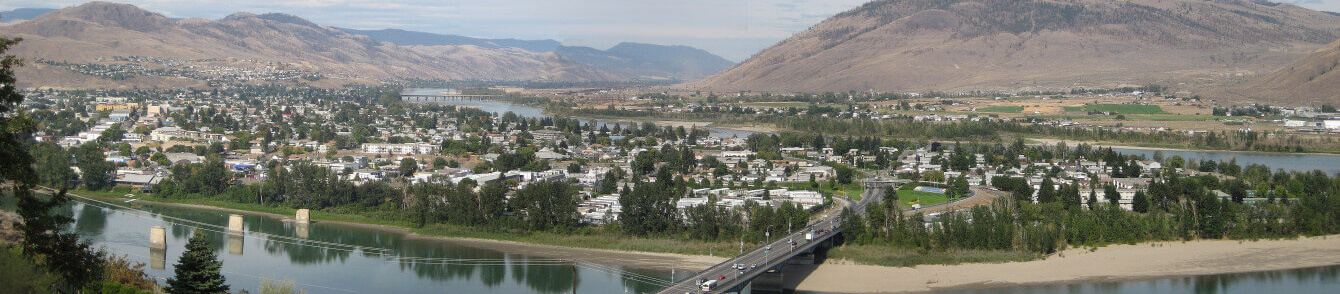
The Pritchard Bridge spans the South Thompson River connecting the residents of the North side of the river with the South shore and highway. The Pritchard bridge is a wooden stringer system and has an opening at it’s highest point to allow boats to pass under. The bridge was constructed in the early 1900’s and it is a single lane bridge with large pull outs so oncoming traffic can pass. The bridge will support heavier loads as it does have a concrete deck and allows for logging trucks to pass over.
Properties & Real Estate
The area of Pritchard is located along Highway #1 East of the City of Kamloops. This area is split by the Highway, one area of Pritchard rests at the valley bottom along the South Thompson River and the other area of Pritchard stretches into the southern hills and mountains. The smaller residential lots are located at the valley bottom across the Pritchard bridge on Decamillis Road, Bostock Crescent, Gerella Road, Gore Road, Anker Road and Foort Road to name a few.
Predominantly, large acreages are found on the south side of the river off of Duck Range Road, Martin Prarie Road (main roads in this area of Pritchard) as well as Harrison Road, Schamps Road and Stark Road. Most of the acreages are located on the south side of Pritchard. There are a few medium and large sized acreages spread on the Northern side of Pritchard off of Pinantan Pritchard Road, Pinantan Road and Kamloops-Shuswap Road.
Click here to view properties for sale in Pritchard.
Shopping
The only shopping in this area is the Pritchard store located at the corner of the Trans Canada Highway #1 and Martin Prarie Road. Along with basic necessities the Prtichard store offers spirits and liquor as well. The closest shopping to Pritchard is Chase which is 18.5 kilometers east of Pritchard or Kamloops which is 39 kilometers west of Pritchard. There are some smaller shopping centres west of Pritchard such as the new Town Centre in Dallas (opening in 2012) that is 27.2 kilometers and shopping in Valleyview (Coopers, Shoppers Drug Mart, Dollar Store, TD, Interior Savings and other retailers) that is 34 kilometers from Pritchard.
There are local farmers that offer fresh foods in the area as well.
Schools
All school aged children are taken to school by bus. To view school information for this area click here.
Recreation
There are a number of outdoors activities to enjoy in the Pritchard area. In the summer it is easy to power boat from Pritchard, up the south Thompson River to Shuswap Lake. There are a number of fishing lakes in the area, cross country skiing, off road adventures on ATV, dirtbike or snowmobile, horseback riding, canoeing, kayaking and hiking.
Click here to view properties for sale in Pritchard.
To read more about other neighbourhoods click the link below:
Cheapest is not always best. We know that’s true when we’re shopping for anything else. But we still tend to believe that lowest rate is the one and only factor in choosing a mortgage. Most Canadian homeowners would be shocked to discover that their low-rate mortgage could actually cost them more in the long run.
Why? Because the right mortgage is about a lot more than just rate.
It’s true that even a small reduction in rate can mean interest savings over the life of your mortgage. And mortgage brokers are experts at seeking out competitive rates from a wide range of lenders. But they also look deeper. Sometimes those cut-rate mortgages come with higher fees, penalties, or restrictive terms, which could prove more costly over the long term than a slightly higher-rate mortgage with flexible terms.
One of the best ways to save interest, for example, is to use pre-payment options. If you get a quarterly bonus, a tax refund, or a seasonal income boost, then you have some excellent opportunities to slash your mortgage costs. Putting extra money against your mortgage principal could save you thousands of dollars in interest. If your cut-rate mortgage doesn’t permit pre-payments, that’s a huge missed opportunity.
Also watch for low-rate “teasers”: cut-rate mortgages with a short timeline. Sometimes a lender will offer a rate that is good for just 30 days, after which the rate will jump. If closing takes a little longer, or there’s a glitch in documentation, then you need to be prepared with a backup plan. These teasers can be stressful – and not always the best deal anyway.
An accredited independent mortgage broker will determine the features and privileges that best meet your personal situation, looking at:
Most people spend more time choosing the right car than choosing the right mortgage, although it’s likely the largest expense they’ll likely ever undertake.
Make sure you have a mortgage that is custom-built for your personal situation. Cheapest isn’t always best. And obviously the most expensive mortgage is rarely the best choice either. But the right combination of rate and features – matched to your needs – is the fastest route to mortgage freedom. It’s your mortgage broker’s job to help you with that route-planning: a map for your financial future.