Cute North Kamloops home close to shopping, park & transportation. Some updates done such as flooring & bathroom sink. Pool has new liner & pump in 2010. 70 amp service. Room for a detached workshop. Lots of potential. 3 bedrooms, 1 bathroom & 3/4 basement with workshop. Nice large patio in back with veggie garden. Fully fenced yard.
To view all homes for sale in Kamloops click here.
This article appeared in Kamloops this Week on February 11th, 2011 and was written by Jeremy Deutsch.
Though many of the real-estate conditions in Canada appear to be bipolar, the Tournament Capital is expected to be the bastion of stability in the market. The Kamloops and District Real Estate Association (KDREA) is predicting no major swings in the market — up or down — in 2011.
“It’s certainly not a hot market,” said Dick Pemberton, KDREA president. “Stable is the best term to describe it.” He makes his prediction despite a dip in sales last month.
Residential sales in the area fell by 18 per cent in January to 93 units, from 114 the previous January in 2010. The majority of the sales still falling in between the $200,000- to $400,000-price range.
However, Pemberton said real-estate agents in the region have noticed a dramatic increase in the number of people stopping in at open houses in the last few weeks, leading to a more optimistic forecast for the spring and summer.
Some real-estate experts are predicting house prices across Canada will fall by as much as 25 per cent in coming years, while other reports have the Vancouver housing market heating up, similar to last decade. But, tighter mortgage rules recently introduced by the federal government will no doubt keep some buyers out of the market.
Ottawa has lowered the maximum amortization period for a government-insured mortgage to 30 years from 35. The change is meant to help lower consumer debt. It’s a move applauded by the KADREA members, which sees it as a positive change in the long term. “Given the economy right now, we felt it was a prudent move and won’t have a significant impact on the market place,” Pemberton said. He added it takes borderline buyers out of the picture until they’re in a better position to purchase a home.
With no major increase in interest rates in the horizon, Pemberton suggested it’s still a good time to get into the market. Homes sales weren’t the only stats to take a dip last month.
The number of single-family permits issued by the city also dropped to just four in January, from 13 the previous year. The city also issued $5.4 million in commercial-building permits for the month, but the combined total of the two sectors failed to match the $13 million in overall permit activity from January 2010. It’s a slow start for the city’s building-permit department, which handed out $191 million worth of permits in 2010.
This article appeared in Kamloops This Week on January 27th, 2011 and was written by Jeremy Deutsch.
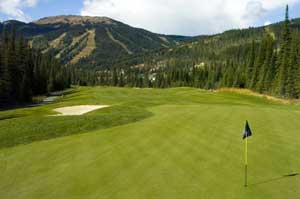
As homeowners in much of the province, including Kamloops, saw their property values rise in 2010, there is at least one real-estate sector that wasn’t quite as fortunate. Many recreational properties were down in value last year — and Sun Peaks Resort was not spared.
According to BC Assessment, residential properties in the resort municipality dropped in value by an average of 2.5 per cent. Whistler, the only other resort municipality in B.C., also saw similar decreases in residential-property values.
Graham Held, a deputy assessor with BC Assessment, noted the values are based on the market and incorporation wouldn’t have had any effect on assessments. “It’s just what the sales are telling us,” he said. There are 1,600 properties at Sun Peaks on BC Assessment’s rolls, including 425 single-family homes.
The resort became a municipality last summer and 2010 marks the first year it is on the tax rolls as a municipality. But the drop in value is neither a surprise nor major concern for Sun Peaks Mayor Al Raine. He feels the two per cent decline isn’t unreasonable considering the economic environment.
Raine noted recreational properties tend to take a bigger hit in value than residential properties when there is a downturn in the economy, adding some units in the village were sold for very low prices.
He also suggested a couple of other factors for the decline, including the harmonized sales tax, in which an HST credit isn’t offered on recreational properties, and that units were being built faster in the resort than the demand supported. “Quite frankly, I’m happy with stable prices for these days,” Raine said. He said real-estate agents have told him they expect demand to pick up in the spring. Raine said he still considers Sun Peaks “a good place to invest and live.”
Last year, a home in Sun Peaks sold for $2.2 million, besting the previous most-expensive house by $700,000. Another home was recently listed for $4.3 million, which will be a new record if sold. For the second year in a row, the majority of Kamloops homeowners saw a modest increase in their property assessments.
According to BC Assessment, the property owner of an average single-family dwelling — assessed at $309,000 — likely noticed their property value increase by 4.7 per cent.
OTTAWA – February 8, 2011 – The Canadian Real Estate Association (CREA) has revised its 2011 forecast for home sales activity via the Multiple Listing Service® (MLS®) Systems of Canadian real estate Boards and Associations, and extended it to 2012.
“Home buyers recognize that low mortgage interest rates represent a once in a lifetime opportunity. At the same time, they expect that rates will rise, so they’re doing their homework in order to understand what it could mean in terms of higher mortgage payments down the road before they make an offer,” said Georges Pahud, CREA President. “The housing market and buyer psychology is different now than it was at the beginning of last year, so buyers and sellers would do well to consult their REALTOR® to understand local market trends.”
The upward revision to CREA’s forecast for 2011 reflects recent improvements in the consensus economic outlook and a further expected improvement in consumer confidence. National sales activity is now expected to reach 439,900 units in 2011, representing an annual decline of 1.6 per cent. In 2012, CREA forecasts that national sales activity will rebound by three per cent to 453,300 units, which is roughly on par with the ten year average.
“Recent additional changes to mortgage regulations will further ensure that buyers don’t buy more home than they can afford when interest rates inevitably rise,” said Klump. “The announcement of the new changes to mortgage regulations will likely bring forward some sales into the first quarter that would have otherwise occurred later in the year, particularly in some of Canada’s more expensive housing markets. This is expected to produce a milder version of the volatility in sales activity that we saw last year which resulted from additional transitory factors.”
Three transitory factors contributed to volatility in sales activity last year: changes in mortgage regulations announced last February, the early withdrawal by the Bank of Canada of its conditional commitment to keep interest rates on hold until the second half of 2010, and the introduction of the HST in BC and Ontario during the summer of 2010.
CREA expects that home sales activity will gain traction after dipping in the second quarter as the economic recovery and job growth continue, incomes grow, and consumer confidence further improves. “Even though mortgage interest rates are expected to rise later this year, they will still be within short reach of current levels and remain supportive for housing market activity. Strengthening economic fundamentals will keep the housing market in balance, which will keep home prices stable,” said Klump.
The national average home price is forecast to rise 1.3 per cent in 2011 and 2012, to $343,300 and $347,900 respectively. Average price is expected to rise modestly in most provinces, reflecting the continuation of a healthy balance between supply of, and demand for, homes listed for sale. Although the supply of new listings is expected to trend higher, the expected continuation of sellers’ market conditions in Manitoba is forecast to result in a bigger percentage increase in average price in 2011 and 2012 compared to other provinces.
* Provincial weighted average price for Quebec; does not affect unweighted national average price calculations. Information on Quebec’s weighted average price calculation can be found at: http://www.fciq.ca/immobilier-economiste.php
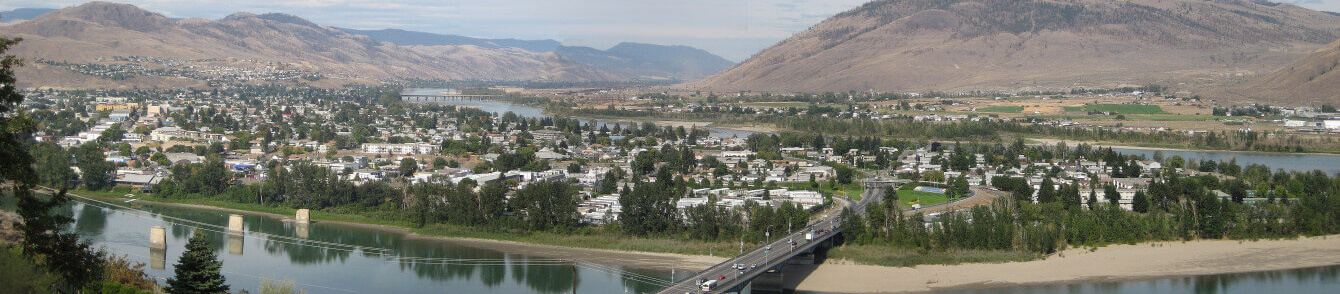
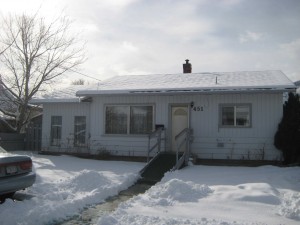 Cute North Kamloops home close to shopping, park & transportation. Some updates done such as flooring & bathroom sink. Pool has new liner & pump in 2010. 70 amp service. Room for a detached workshop. Lots of potential. 3 bedrooms, 1 bathroom & 3/4 basement with workshop. Nice large patio in back with veggie garden. Fully fenced yard.
 Though many of the real-estate conditions in Canada appear to be bipolar, the Tournament Capital is expected to be the bastion of stability in the market. The Kamloops and District Real Estate Association (KDREA) is predicting no major swings in the market — up or down — in 2011.
 As homeowners in much of the province, including Kamloops, saw their property values rise in 2010, there is at least one real-estate sector that wasn’t quite as fortunate. Many recreational properties were down in value last year — and Sun Peaks Resort was not spared.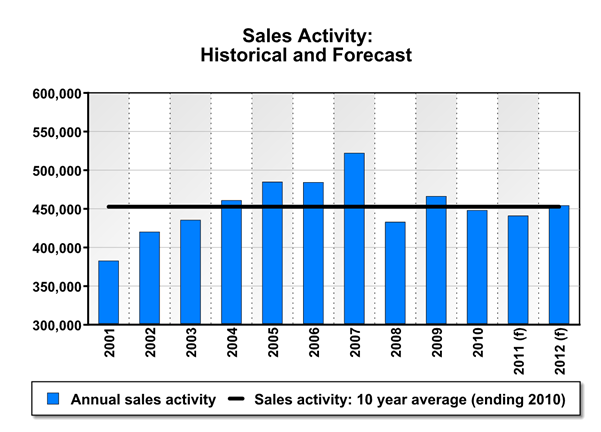
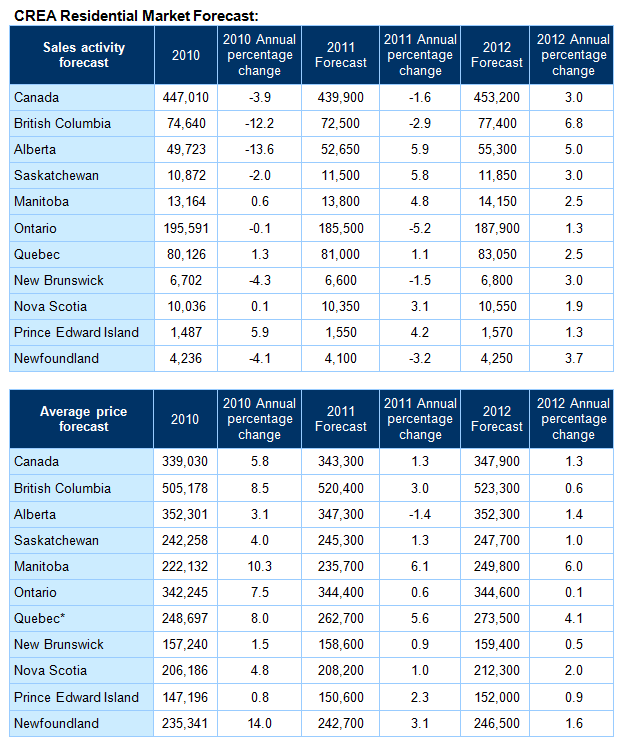 * Provincial weighted average price for Quebec; does not affect unweighted national average price calculations. Information on Quebec’s weighted average price calculation can be found at: