Vancouver, BC – January 15, 2016. The British Columbia Real Estate Association (BCREA) reports that a record number of home sales were recorded in the province for the month of December. A total of 6,590 residential unit sales were recorded by the Multiple Listing Service® (MLS®) last month, up 29.8 per cent from the same month the previous year. Total sales dollar volume hit a record $4.62 billion for the month of December, up 55.4 per cent compared to the previous year.
The average MLS® residential price in the province climbed above the $700,000 threshold for the first time in BC last month, rising 19.7 from December 2014 to $700,943.
“The 2015 housing market finished in dramatic fashion, with record demand for month of December,” said Cameron Muir, BCREA Chief Economist. “BC home sales breached the 100,000 unit threshold in 2015, and it was only the third time on record that this high watermark was achieved.”
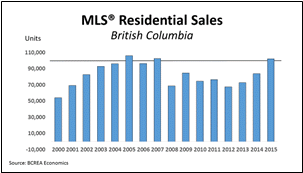
The combination of record home average home prices and near record annual unit sales prices propelled the dollar volume of MLS® residential to a record $65.3 billion in 2015, up nearly 37 per cent from the previous year. The average annual residential price reached a record $636,627 last year, up 12 per cent from 2014. A total of 102,517 residential unit sales were recorded, an increase of 22 per cent compared to 2014. A record 106,310 residential unit sales were recorded in 2005, while the only other year eclipsing 2015 were 2007 when 102,805 unit sales were recorded.
This article appeared on the Business News Network on January 14th, 2016 and was written by Fergal Smith of Reuters.
Bank of Canada interest rate cut speculation intensified on Tuesday as crude oil prices and the Canadian dollar both weakened to 12-year lows, with traders pricing in a full 25-basis-point easing by mid year.
The Canadian central bank cut rates twice in 2015 as an oil price shock drove the economy into recession in the first half of the year, but has been sidelined since July.
“People are calling for the Bank of Canada to cut rates at the next meeting,” said David Bradley, director of foreign exchange trading at Scotiabank.
The implied probability of a Bank of Canada rate cut at next week’s interest rate announcement has climbed from 22 percent after a speech by Governor Stephen Poloz last week to more than 30 percent, while the market has nearly fully discounted a rate cut in May.
The prospect of easing helped drive the yield on the Canadian government’s two-year bond to a four-month low.
Even so, “the market is underpricing the probability of a rate cut next week,” said Andrew Kelvin, senior rates strategist at TD Securities.
A Jan. 7 speech by Poloz had left investors doubtful he would cut Canada’s benchmark rate this month.
However, the central bank’s quarterly Business Outlook Survey has since found that business sentiment has deteriorated, while investment and hiring intentions have fallen to their lowest levels since 2009.
“It’s clearly going to be a very close call for the Bank of Canada given the financial turmoil we have seen,” said Kelvin.
U.S. crude oil prices have fallen an additional 8 percent this week, dipping below US$30 a barrel. Moreover, Western Canada Select, a blend produced by Canadian oil companies, trades at a greater than $14 discount to U.S. crude oil prices.
“We know falling oil prices have preceded both the last two cuts from the Bank (of Canada),” said Kelvin.
The central bank assumed a $45 price for U.S. crude oil prices when making its latest forecasts for the economy in October.
Speaking on Tuesday, Canadian Finance Minister Bill Morneau acknowledged that the public is concerned about the economy, but declined to indicate whether the government will stick to its budget deficit pledge or boost spending.
“We will be working in our budget to make sure that our initiatives help to grow the economy. We think the initiatives we already outlined are the appropriate initiatives to make a difference,” he said.
This article was written by James Peters of CFJC News and appeared on their website on January 13th, 2016.
Kamloops — The final numbers are in for 2015, and the Kamloops new home construction market performed almost exactly as well as it did in 2014.
According to the Canada Mortgage and Housing Corporation, a total of 523 new units were started last year, just five more than the year previous.
CMHC Market Analyst Taylor Pardy says don’t expect big changes in that number any time soon.
“The outlook for new construction in Kamloops is expected to be positive for the 2015-2017 period in general, with total housing starts remaining steady,” said Pardy adding, “new housing construction will be supported by a combination of low mortgage rates, population growth, and a balanced re-sale market”
Pardy also indicated that stability is very positive, especially considering the uncertainty much of the rest of Canada is seeing right now.
Neighbourhood: Dufferin and Southgate, Kamloops, B.C. Real Estate. Dufferin is located south west of the city of Kamloops and north of the Trans Canada highway, Aberdeen and Pineview, set up against Mount Dufferin. Southgate is located west of Kamloops city centre and is the home of Thompson Rivers University, many businesses, industrial parks and major retailers. You can reach the two areas in five to ten minutes by car.
For up to date Kamloops area homes for sale click here.
Properties & Real Estate
Dufferin has a mix of housing units. New and older single family homes dominate the region with newer townhouse units also available. Dufferin doesn’t have the variety of homes on the market like it’s neighbours Aberdeen or Pineview Valley but there are some great properties to choose from.
The more mature area of Dufferin is located near Aberdeen Mall. Pacific Way, Cannel Drive, Hillside Drive and Place, Cascade Street, Mt. Dufferin Drive, Avenue and Crescent, Park Way, Plateau Place, Monteray Place, Davies Place, Sunshine Court and Place and Scott Place all make up this mature part of Dufferin. This area does have some newer homes but you do find more mature trees and landscaping in this region of Dufferin. One of the newer developments in Dufferin can be found at the top of Hillside Drive where it meets Copperhead Drive. Copperhead Drive and Saskatoon Place make up the newer development that is set against the hillside of Mount Dufferin. A lot of these homes in this area were built in 2010 onwards.
The properties on Copperhead Drive and Saskatoon Place have very easy access to the hiking and biking trails of Kenna Cartwright park. In some cases the properties have a gate from their back yard to access the park.
The newest homes in Dufferin can be found on Prairie Rose Drive and the Hidden Trails region. Prairie Rose along with Rockcress have a number of homes that were built from 2015 onwards. There are a number of large executive homes in the Prairie Rose area with some featuring views of the city and river valley. These homes can be quite expensive in this area due to the type of construction.
Hidden Trails at Mount Dufferin is the newest subdivision in the Dufferin area. It is located at the end of Pacific way and is bordered by Kenna Cartwright park. There are a few single family lots (4 phases) and two multi-family developments. Orabella townhouses are completed and located on Prairie Rose Drive. Rockcress Drive is the home to mostly single family however there is a strata development currently in the earlier stages of construction (2025).
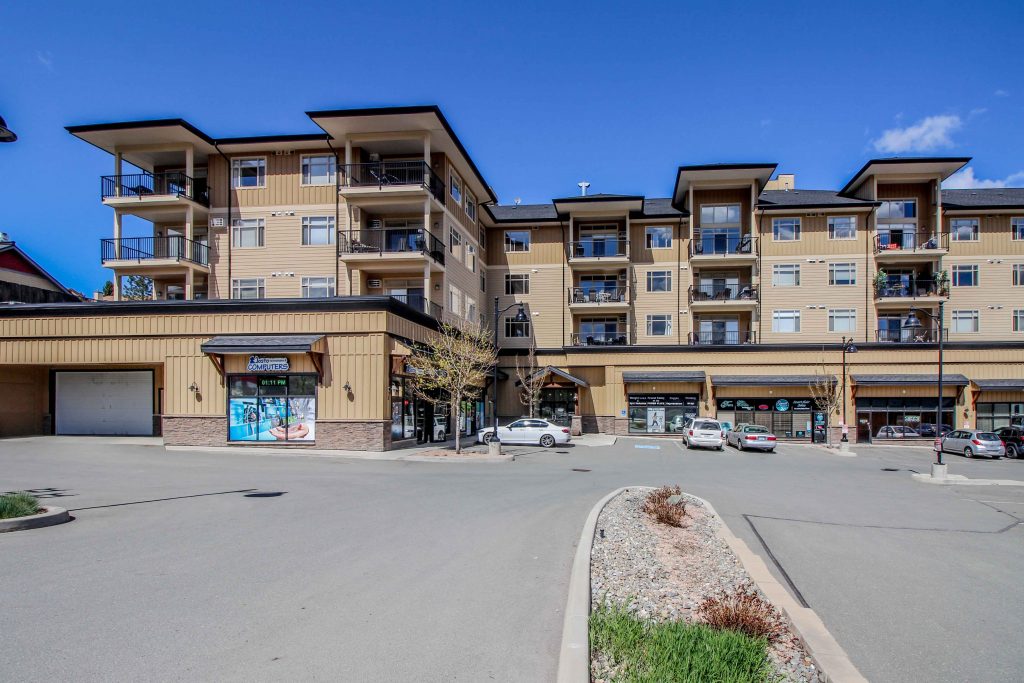
The largest condo development in Dufferin is Hillside Lofts (picture below). These units range in size and have higher end finishings. There is secure underground parking and an elevator in this complex. This development has a commercial residential mix with a few retailers located on the south side of the complex. Hillisde Lofts is located steps to Aberdeen Mall and other shopping such as Chapters, Canadian Tire, Staples and much more!
Dufferin also has duplex style townhouses in two developments close to Dufferin Elementary school. These units are walk up style and level entry rancher style with basements. These two complexes were built between 2005 and 2008.
To view townhome and duplex strata units for sale click here.
To view condos/apartments for sale in the Dufferin area click here.
Click here to view homes for sale in the Dufferin and Southgate area.
Shopping & Services
Dufferin sits north of Aberdeen and Pineview Valley up against Mount Dufferin. Dufferin is closely located to all the uptown local retailers including Aberdeen Mall, Costco, Chapters, Staples and many other stores. Southgate and Sahali are mainly home to numerous businesses, strip malls, industrial areas, big box stores (Real Canadian Superstore, Safeway, Save on Foods, Winners/Home Sense, Home Depot, WalMart, Michaels). A number of financial institutions are also located in the Southgate area including BMO, TD Canada Trust and CIBC to mention a few.
The Cascades Casino is located minutes from Dufferin. The casino also houses three restaurants.
Kenna Cartwright park is located in Dufferin and Southgate, sitting on 800 hectares of Mt. Dufferin and easily accessible on the north east side of the mountain (near the Home Depot) or at the top of Mount Dufferin off of Pacific Way. This beautiful park has panoramic valley views and many hiking and biking trails for the whole family.
Tournament Capital Centre is located at Thompsons River University and has many different facilities all in one building. Gymnastics, swimming, indoor track, fitness facility, courts and much more. There are also a number of sports fields that surround the facility.
Dufferin Elementary School has a playground for children.
Transportation
Dufferin and Southgate have regularly scheduled public transportation. Public transportation stops at the Aberdeen Mall, major shopping areas and TRU making them easily accessible. Click here to view the BC Transit website.
Dufferin is located seconds from the Trans Canada Highway #1 and the Coquihalla. This makes this area desirable for people who work out of the city centre (such as Highland Valley Copper Mine in Logan Lake and New Gold in Cherry Creek).
The Kamloops Airport is under 15 kilometers from Dufferin and is a 20 minute drive.
For more detailed information about MLS home listings in Dufferin, Southgate and all of Kamloops click here.
To read more about other neighbourhoods click the link below:
 The average MLS® residential price in the province climbed above the $700,000 threshold for the first time in BC last month, rising 19.7 from December 2014 to $700,943.
 This article appeared on the
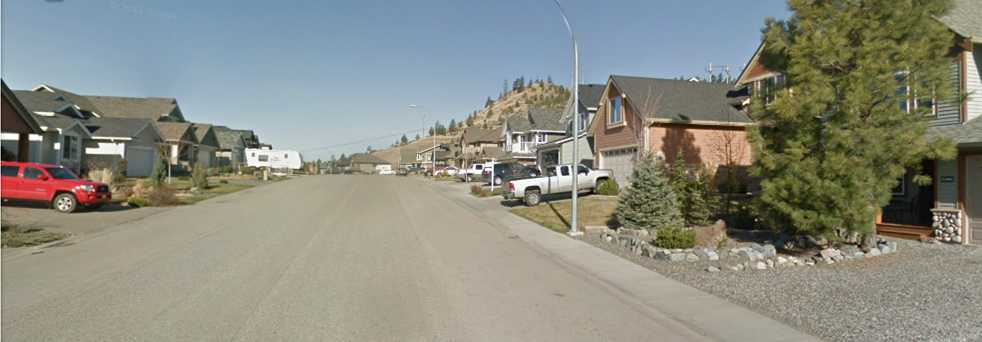
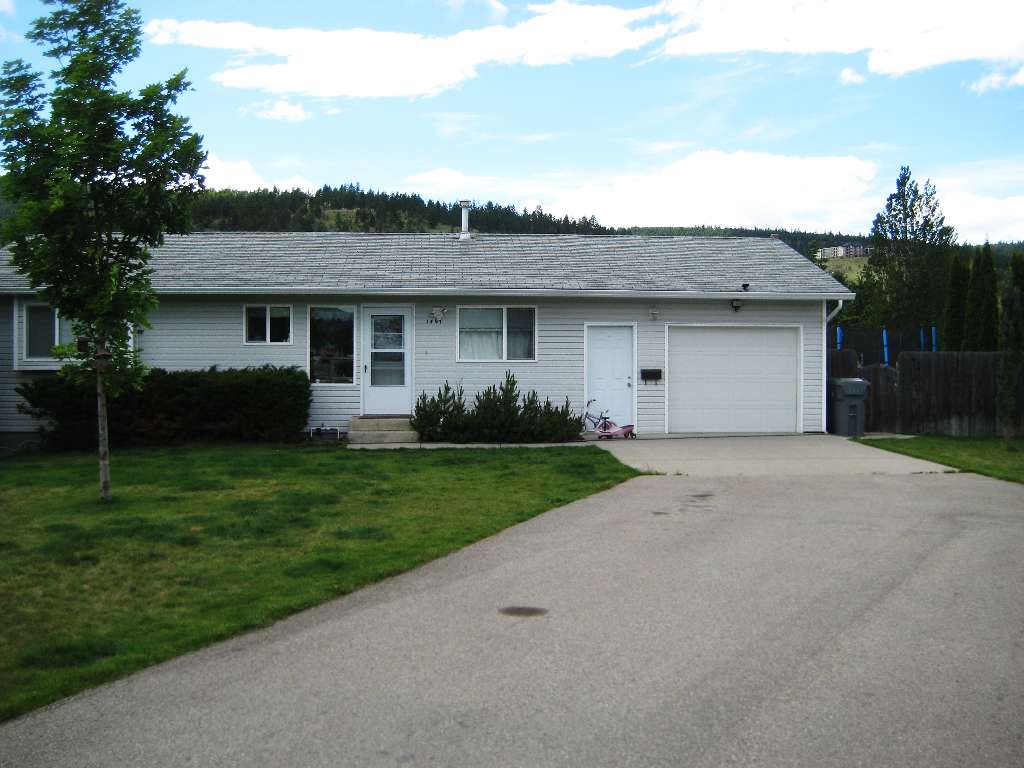 The more mature area of Dufferin is located near Aberdeen Mall. Pacific Way, Cannel Drive, Hillside Drive and Place, Cascade Street, Mt. Dufferin Drive, Avenue and Crescent, Park Way, Plateau Place, Monteray Place, Davies Place, Sunshine Court and Place and Scott Place all make up this mature part of Dufferin. This area does have some newer homes but you do find more mature trees and landscaping in this region of Dufferin. One of the newer developments in Dufferin can be found at the top of Hillside Drive where it meets Copperhead Drive. Copperhead Drive and Saskatoon Place make up the newer development that is set against the hillside of Mount Dufferin. A lot of these homes in this area were built in 2010 onwards.
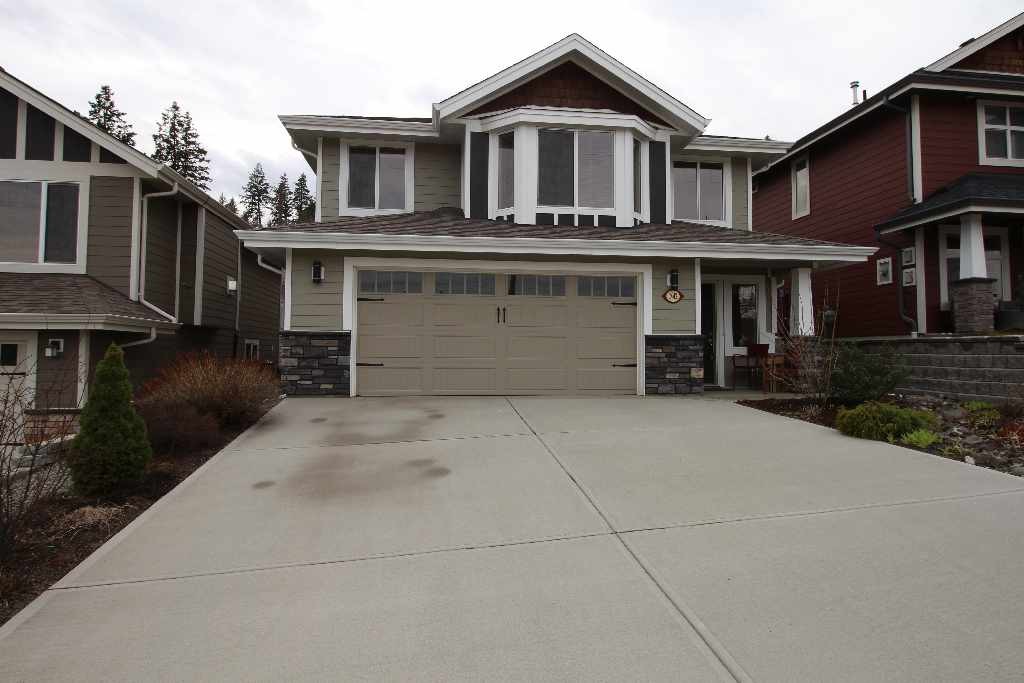 Hidden Trails at Mount Dufferin is the newest subdivision in the Dufferin area. It is located at the end of Pacific way and is bordered by Kenna Cartwright park. There are a few single family lots (4 phases) and two multi-family developments. Orabella townhouses are completed and located on Prairie Rose Drive. Rockcress Drive is the home to mostly single family however there is a strata development currently in the earlier stages of construction (2025).